


Sign up for workout ideas, training advice, reviews of the latest gear and more.


A 30 minute dumbbell HIIT workout is one of the most efficient ways to combine strength training and cardiovascular conditioning in a single session. With only a pair of dumbbells and a small workout space, you can challenge every major muscle group, raise your heart rate, and build the kind of practical fitness that carries over to everyday life. The workout is short enough to fit into a busy day but structured enough to deliver a meaningful full-body training stimulus.
Unlike cardio-only intervals, dumbbell high-intensity interval training asks your muscles to produce force while your cardiovascular system works hard to keep up. Squats, rows, presses, hinges, and loaded carries turn a simple interval workout into a comprehensive routine. The result is a time-efficient session that can help improve strength, muscular endurance, work capacity, coordination, and overall fitness when it is performed consistently.
This 30 minute dumbbell HIIT workout uses controlled, repeatable movements rather than complicated exercises. You do not need to jump, race through repetitions, or use the heaviest weights you own. The goal is to maintain strong form while working at a challenging but sustainable pace. Choose dumbbells that allow you to finish each interval with control, adjust the exercises to your current ability, and focus on quality from the first round to the last.
Dumbbell HIIT combines resistance exercises with planned periods of work and recovery. During each work interval, you perform a strength-based movement at a focused pace. During the recovery interval, you rest completely or move gently while preparing for the next exercise. This work-to-rest structure lets you accumulate a significant amount of training in a relatively short period.
Traditional HIIT is often associated with sprinting, jumping, or fast bodyweight drills. Dumbbell HIIT can be different. Adding external resistance means that an exercise does not have to be explosive to feel intense. A controlled goblet squat, Romanian deadlift, or push press can elevate your heart rate while building strength. This makes the format highly adaptable for home workouts, busy schedules, and exercisers who prefer low-impact training.
Intensity should come from a smart combination of weight, movement, and work duration—not from losing control. An effective interval feels demanding near the end, but your technique should remain recognizable. If your back begins to round, your knees collapse inward, or you need momentum to complete every repetition, reduce the dumbbell weight or slow the pace.
The biggest advantage of this training style is efficiency. A well-designed routine trains the lower body, upper body, and core while also challenging the heart and lungs. Compound exercises recruit several muscle groups at once, allowing you to accomplish more than you would with a session built around single-muscle movements.
Dumbbell HIIT also supports strength and muscular endurance. Repeated squats and lunges challenge the glutes, quadriceps, and hamstrings. Rows strengthen the back and arms, while presses train the shoulders, chest, and triceps. Because the exercises are performed in intervals, the muscles learn to keep working as fatigue gradually increases.
Another benefit is flexibility. You can perform the routine at home or in the gym, and you can adjust nearly every variable. A beginner can use light weights, extend the rest periods, and eliminate impact. A more experienced exerciser can use moderately heavier dumbbells, increase movement quality, or complete more repetitions without changing the workout’s basic design.
The short format may also make consistency easier. A realistic routine completed two or three times each week is more valuable than an overly ambitious program that is difficult to maintain. Thirty minutes includes the warm-up and cooldown, so the workout has a clear starting and finishing point.
You need one pair of dumbbells and enough room to take a step forward, backward, and to each side. A supportive exercise mat is optional. Keep water nearby, wear stable athletic shoes, and remove anything that could interfere with your movement.
If possible, have two pairs of dumbbells available: a lighter pair for upper-body exercises and a moderately heavier pair for squats, deadlifts, and rows. One pair is still enough. You can make a weight more manageable by holding only one dumbbell, shortening the range of motion, or performing fewer repetitions during the interval.
Choose a load you could lift for approximately 10 to 15 controlled repetitions when fresh. The ideal weight depends on the exercise, so do not expect the same pair to feel equally challenging for a deadlift and an overhead press. For a mixed full-body circuit, it is usually better to start slightly lighter and protect your technique.
This routine includes a four-minute warm-up, four five-minute training blocks, two one-minute transition periods, and a four-minute cooldown. Each training block contains five exercises. Perform each exercise for 40 seconds, then use 20 seconds to rest and prepare for the next movement. That produces five minutes of work per block.
After Blocks One and Three, move directly into the next block. After Blocks Two and Four, use the planned transition or begin the cooldown as described. If you are new to intervals, use 30 seconds of work and 30 seconds of rest. The entire session can still fit within 30 minutes when the transitions remain brief.
Aim for a perceived effort of about seven or eight on a scale of one to ten during most work intervals. You should be breathing hard and feel challenged, but you should still be able to maintain good technique. Do not treat the first block like a sprint. A steady effort allows you to perform better across the whole workout.
A warm-up prepares your joints, muscles, and nervous system for loaded movement. Complete each exercise for 40 seconds and use about 20 seconds to transition. Start with bodyweight only.
Stand tall and march in place while naturally swinging your arms. Gradually lift the knees a little higher and increase the pace. Keep your ribs stacked over your pelvis instead of leaning backward. This gently raises your heart rate and warms the hips and shoulders.
Stand with your feet around shoulder-width apart. Sit the hips down and back while keeping your chest comfortably lifted. Stand and reach both arms overhead. Use a pain-free depth and keep the knees tracking in the same direction as the toes.
Step one foot backward and lower into a comfortable lunge, then return to standing and switch sides. Hold a wall or chair if you need help with balance. Keep most of your pressure through the front foot and maintain a tall torso.
Place your hands in front of your thighs. Soften your knees, push your hips backward, and slide your hands toward your knees. Pause with a long spine, pull your elbows toward your ribs as if rowing, and then stand. This rehearses the hinge and row used later in the workout.
This block establishes a strong foundation with squat, hinge, and lunge patterns. Perform each movement for 40 seconds, rest for 20 seconds, and continue to the next exercise.
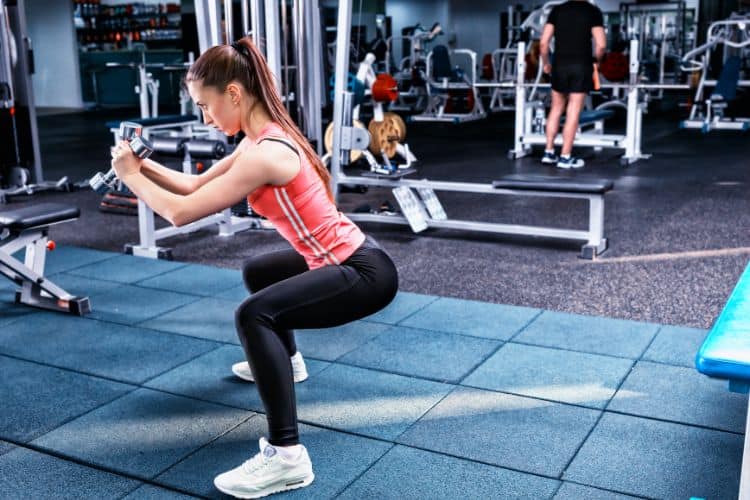
Hold one dumbbell vertically against your chest. Brace your midsection, sit between your hips, and keep your whole foot connected to the floor. Drive through your feet to stand and squeeze the glutes without leaning backward. Use a chair as a depth target if needed.
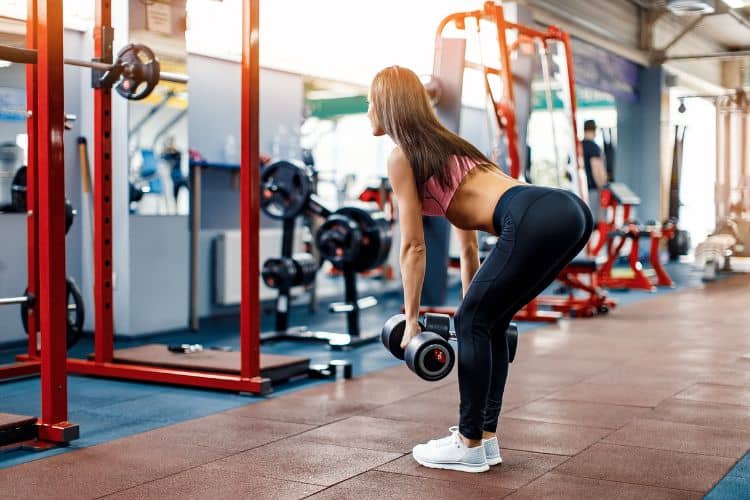
Hold the dumbbells in front of your thighs with your palms facing your body. Keep a soft bend in the knees, send your hips backward, and lower the weights close to your legs. Stop when you feel tension through the hamstrings while your spine remains neutral. Push the floor away and bring your hips forward to stand.
Hold the dumbbells by your sides and step one foot back. Lower only as far as you can control, then press through the front foot to return. Alternate legs. If balance is difficult, hold one dumbbell at your chest and use your free hand for support.
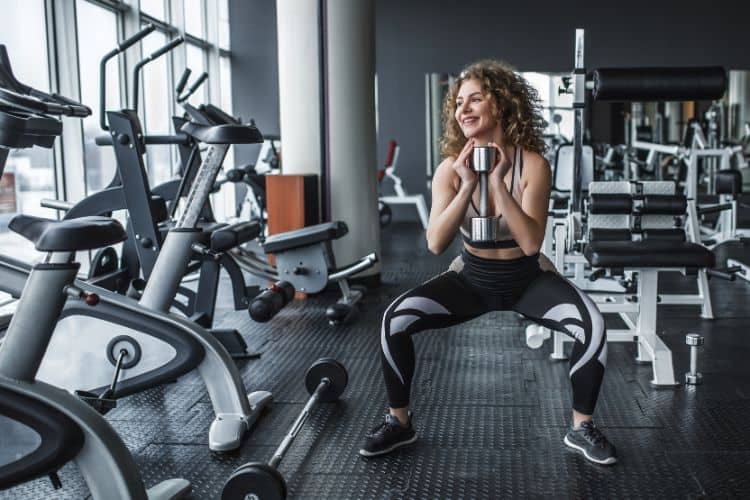
Take a wider stance with your toes turned slightly outward and hold one dumbbell vertically between your hands. Lower the hips while keeping the knees aligned with the toes. Stand with control. Avoid forcing an extremely wide stance; use the foot position that lets your hips and knees move comfortably.
Perform a controlled dumbbell deadlift. As you reach the top, rise onto the balls of your feet for a calf raise, pause briefly, and lower your heels before beginning the next repetition. Remove the calf raise if it affects your balance.
The second block focuses on pushing, pulling, and resisting unwanted torso movement. Keep your core gently braced and avoid rushing the repetitions.
Hinge at the hips with a neutral spine and let both dumbbells hang beneath your shoulders. Pull one weight toward your ribs, lower it with control, and switch arms. Keep your shoulders away from your ears and minimize torso rotation. You can perform both arms together if alternating feels awkward.
Lie on your back with bent knees and a dumbbell in each hand. Position your upper arms at a comfortable angle from your torso. Press the weights above your chest, then lower until the backs of your upper arms gently contact the floor. Keep your wrists stacked over your elbows. If getting down to the floor is uncomfortable, substitute a standing dumbbell chest press by pressing the dumbbells together at chest height.
Kneel with one knee down and the opposite foot forward. Hold one dumbbell at the shoulder on the same side as the down knee. Brace your core and press overhead without arching your lower back. Switch sides halfway through the interval. Perform the exercise standing if kneeling is uncomfortable.
Place the dumbbells beneath your shoulders and take a kneeling plank position. Spread your knees for stability, brace your core, and row one dumbbell toward your ribs. Lower it and switch sides. Keep your hips as level as possible. A supported one-arm row with your hand on a chair is an excellent alternative.
Sit tall or stand with your feet stable. Hold one dumbbell by its ends and slowly circle it around your head. Keep the movement controlled and the weight close without allowing the ribs to flare. Change direction halfway through. Use a light weight and a pain-free shoulder range.
Take one minute after this block to drink water, adjust your weights, and prepare for the next section.
The third block combines upper- and lower-body actions. These compound movements raise the overall demand, so prioritize smooth transitions and controlled breathing.
Hold the weights at shoulder level and perform a squat. As you stand, press the dumbbells overhead. Lower the weights to your shoulders before beginning the next squat. If pressing two dumbbells is too demanding, hold one weight with both hands or perform the squat and press as separate, deliberate actions.
Hinge at the hips and lower the dumbbells toward mid-shin. Stand powerfully, guide the elbows up and outward, and bring the weights toward the lower chest. Keep the dumbbells close to your body and avoid yanking them with your arms. Substitute a deadlift to row if the high pull bothers your shoulders.
Hold one dumbbell at your right shoulder. Squat, stand, and press the weight overhead. Lower it with control and switch sides after 20 seconds. Your legs should help initiate the movement, but the press should remain stable. Use one hand for light support if necessary.
Hold one dumbbell at your chest. Step to the right, push your hips back over the right leg, and keep the left leg comfortably long. Press through the right foot to return and alternate sides. Reduce the step width or substitute a stationary side-to-side squat if lateral lunges are unfamiliar.
Hold the dumbbells by your sides, hinge at the hips, and drive through the floor to stand. Experienced exercisers may allow the dumbbells to swing slightly behind and forward using hip power, not an arm lift. Beginners should perform quick but controlled Romanian deadlifts instead. Never round the back or force a speed you cannot manage.
The last block increases the cardiovascular challenge without requiring jumps. Stay tall, breathe continuously, and choose a pace you can sustain through the final interval.
Hold a dumbbell at one side like a suitcase and march in place. Keep your shoulders level and resist leaning toward or away from the weight. Switch hands after 20 seconds. Lift each foot with control and keep your torso steady.
Hold one or two weights at shoulder level. Alternate stepping backward, bending the front knee slightly each time. This is a smaller, faster version of a reverse lunge. Maintain an upright torso and reduce the knee bend if fatigue affects your balance.
Hold one light dumbbell horizontally at chest height with both hands. Extend it straight forward, draw it back, and repeat at a controlled pace. Keep your shoulders down and avoid leaning backward. This movement can become surprisingly demanding, so use a light load.
Hold a dumbbell in each hand and march with purpose. Keep your head tall, ribs stacked, and steps quiet. Grip the weights firmly without shrugging. If space allows, turn the march into a farmer carry by walking slowly back and forth.
Hold one dumbbell at your chest and perform a goblet squat. As you stand, lift one knee toward your chest. Squat again and lift the other knee. Keep the knee drive controlled rather than twisting or rushing. Finish the interval at a steady pace with strong posture.
Set the dumbbells down safely and walk slowly in place for about one minute. Let your breathing settle gradually rather than stopping abruptly. Follow with a standing quadriceps stretch or gentle heel-to-glute hold for 30 seconds per side. Then hinge forward with a long spine for a mild hamstring stretch, keeping the knees soft.
Finish with a chest-opening stretch and several slow breaths. Clasp your hands behind your back if comfortable, or place one forearm against a wall and gently turn away. Inhale through your nose and exhale slowly. A cooldown does not need to be intense; its purpose is to transition out of the workout and notice how your body feels.
Beginners can use 30 seconds of work followed by 30 seconds of rest. Use one light dumbbell, perform the movements without weight when necessary, and place a chair nearby for support. Complete only three training blocks during the first few sessions if four blocks cause your form to deteriorate. Progress by adding the final block before increasing weight.
Low-impact does not mean low-effort. Remove jumping, keep one foot on the floor, and use controlled marches instead of rapid footwork. You can still reach a challenging training intensity through compound movements, steady repetitions, and appropriate resistance.
More experienced exercisers can use heavier dumbbells for the squats, deadlifts, lunges, and rows while keeping a lighter pair for pressing movements. You can also increase the work interval to 45 seconds and reduce rest to 15 seconds, but only if technique remains consistent.
Avoid progressing every variable at once. Add weight, add repetitions, reduce rest, or improve range of motion—not all four in the same session. Gradual progression makes performance easier to track and gives your muscles and joints time to adapt.
For many people, two or three dumbbell HIIT workouts per week are sufficient. Leave at least one recovery day between demanding full-body sessions, particularly if you are also lifting weights, running, or taking intense fitness classes. On other days, consider walking, mobility work, easy cycling, or a less demanding strength session.
Your ideal frequency depends on your training experience, sleep, nutrition, stress, and total weekly activity. More is not automatically better. Persistent soreness, declining performance, unusual fatigue, disrupted sleep, or a loss of motivation can be signs that you need more recovery or a temporary reduction in intensity.
The most common error is choosing dumbbells that are too heavy for interval training. A load that feels manageable for five repetitions may become unsafe after several exercises. Begin conservatively and increase weight only after you can complete every block with dependable technique.
Another mistake is confusing speed with intensity. Racing through squats or deadlifts often reduces muscle tension and makes positioning less stable. Use a controlled lowering phase, a strong lifting phase, and a brief reset when needed. The timer tells you how long to work; it does not require a specific number of repetitions.
Do not skip the warm-up or ignore pain. Muscle effort, heavy breathing, and temporary fatigue are expected, but sharp, sudden, or worsening pain is a reason to stop. Anyone returning after an injury, managing a health condition, pregnant or postpartum, or unsure whether vigorous exercise is appropriate should seek individualized guidance from a qualified healthcare or fitness professional.
Track the dumbbell weights you use and make a short note about how the session feels. When you can finish every interval with clean technique and could comfortably do several more repetitions, consider a small increase in resistance. You can also repeat the same workout and aim for smoother movement rather than constantly changing exercises.
Support training with adequate sleep, regular meals, hydration, and enough protein and total energy for your needs. A single workout cannot compensate for inconsistent recovery habits. Results come from repeating appropriate training over weeks and months.
Keep your expectations realistic. A 30 minute dumbbell HIIT workout can contribute to fitness, strength, and body-composition goals, but it works best as part of a broader routine. Daily walking, progressive resistance training, balanced nutrition, and recovery all play important roles.
It can provide a muscle-building stimulus, especially for beginners and people returning to exercise. However, traditional strength training with longer rest periods makes it easier to use heavier loads and progressively overload specific muscles. For balanced results, use dumbbell HIIT for conditioning and full-body training while also including dedicated strength sessions when muscle growth is a primary goal.
Use a weight that feels challenging near the end of each interval without changing your technique. You may need lighter dumbbells for overhead presses and heavier ones for deadlifts or squats. If you have only one pair, choose a manageable weight for your weakest exercise and slow down the stronger movements to increase control.
This workout can support a weight-loss plan by increasing activity, preserving or building muscle, and improving fitness. Body-fat loss ultimately depends on a sustainable calorie deficit over time. Combine training with balanced eating habits, regular daily movement, adequate sleep, and an approach you can maintain.
Yes. Every exercise in this routine can be performed without jumping. Loaded squats, presses, hinges, rows, lunges, and carries can create substantial intensity while keeping the workout low impact. Adjust the range of motion and pace to suit your joints and experience.
Yes. Hold one dumbbell at your chest for squats and lunges, use it with both hands for deadlifts, and alternate sides during rows and presses. Single-dumbbell training can also increase the core challenge because your body must resist leaning and rotation.
The best 30 minute dumbbell HIIT workouts are challenging, repeatable, and appropriate for the person doing them. Use the routine as a flexible framework rather than a test you must pass. Lighten the weights, extend the rest, or replace an uncomfortable movement whenever necessary. As your fitness improves, gradually increase resistance or complete more controlled repetitions during each work interval.
Consistency matters more than exhaustion. When you finish the workout feeling challenged but still in control, you have created a session you can recover from and repeat. With regular practice, smart progression, and attention to technique, this simple pair-of-dumbbells routine can become a powerful part of a sustainable fitness plan.
Continue building your weekly routine with this 2 Day Full Body Dumbbell Workout Plan for structured strength training, or learn How Heavy Women Should Lift before selecting weights for each interval. On days when you want a shorter, joint-friendly session, try the 20 Minute Low Impact HIIT Workout With Dumbbells. You can also add variety with this 30 Minute At Home Dumbbell Workout or strengthen your pulling muscles with the Ultimate Dumbbell Only Back Workout.
Stay up to date on the latest women’s health, fitness and lifestyle trends and tips.
