


Sign up for workout ideas, training advice, reviews of the latest gear and more.

A dumbbell only back workout is one of the most effective ways to build a stronger, more muscular back without needing expensive gym equipment. Whether you’re working out at home, training in a small apartment, or simply prefer the versatility of dumbbells, you can develop every major back muscle with the right exercise selection and proper training technique. From improving posture and reducing back pain to increasing overall strength and enhancing athletic performance, dumbbell back exercises offer countless benefits for beginners and experienced lifters alike. This comprehensive guide covers everything you need to know about creating an effective dumbbell only back workout, including the best exercises, workout routines, training tips, common mistakes, and ways to maximize your results.
Many people believe they need cable machines, pull-up bars, or heavy barbells to build an impressive back. While those tools are beneficial, dumbbells provide a unique training advantage by allowing each side of the body to work independently. This helps eliminate muscular imbalances while improving coordination, stability, and overall functional strength.
Dumbbells also offer a greater range of motion than many machines, allowing your muscles to fully stretch and contract during every repetition. This increased movement helps recruit more muscle fibers, leading to better muscle development over time.
Another major advantage is convenience. A pair of adjustable dumbbells can replace an entire rack of equipment, making them ideal for home gyms and busy lifestyles.
Training your back with dumbbells provides numerous physical and functional benefits beyond simply building muscle.
The back consists of several muscles working together, including the latissimus dorsi, trapezius, rhomboids, rear deltoids, teres major, erector spinae, and smaller stabilizing muscles. Carefully selected dumbbell exercises target each of these muscle groups to create balanced development.
Modern lifestyles often involve sitting for long hours, causing rounded shoulders and poor posture. Strengthening your upper and middle back helps pull the shoulders into better alignment while supporting proper spinal positioning.
Everyday activities like lifting groceries, carrying children, moving furniture, and playing sports require strong back muscles. Dumbbell training develops strength that transfers directly into daily life.
A stronger back supports the spine, stabilizes the shoulders, and improves movement mechanics. Balanced strength throughout the posterior chain helps reduce injuries during exercise and everyday activities.
Whether you run, cycle, swim, play sports, or lift weights, a stronger back improves overall power production, stability, and endurance.
Knowing which muscles you’re training helps improve exercise selection and mind-muscle connection.
The lats are the largest muscles in the back, creating the desired V-shaped appearance. They are responsible for pulling movements and shoulder extension.
The traps extend from the neck to the middle back and assist with shoulder movement, posture, and upper-body stability.
Located between the shoulder blades, the rhomboids retract the scapula and play a vital role in maintaining good posture.
Although technically part of the shoulder, the rear delts work closely with the upper back during rowing movements.
These muscles run along both sides of the spine and help maintain posture while extending the back.
Never skip your warm-up. Five to ten minutes of preparation improves blood flow, activates stabilizing muscles, and reduces injury risk.
Begin with light cardio such as brisk walking or jumping jacks followed by arm circles, shoulder rolls, thoracic rotations, cat-cow stretches, band pull-aparts if available, and light dumbbell rows.
The single-arm row is often considered the king of dumbbell back exercises because it effectively targets the lats, rhomboids, traps, and rear delts while allowing each side to work independently.
Stand beside a bench or sturdy surface, support one hand, keep your back flat, and pull the dumbbell toward your hip. Lower under control while maintaining a full stretch.
Perform 3 to 4 sets of 8 to 12 repetitions per arm.
This compound movement trains nearly every muscle across the upper and middle back.
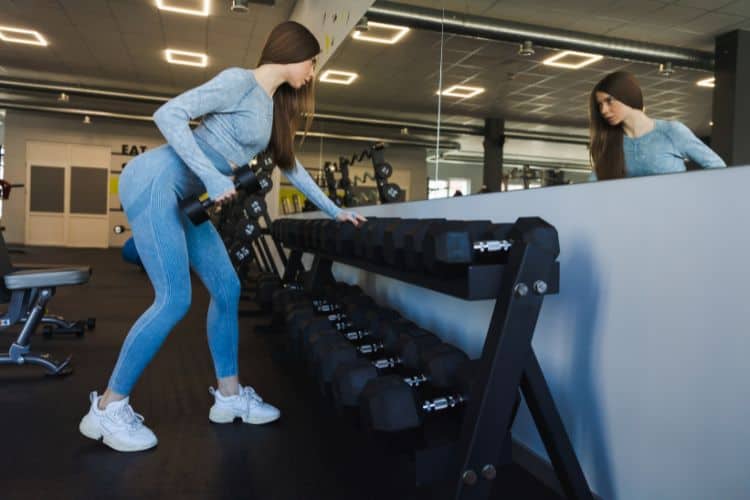
Hold two dumbbells, hinge at the hips until your torso is nearly parallel with the floor, then pull both dumbbells toward your lower ribs while squeezing your shoulder blades together.
Complete 3 to 4 sets of 8 to 12 reps.
Using an incline bench eliminates momentum while placing more tension directly on the back muscles.
Lie chest-down on an incline bench and row both dumbbells upward while keeping your chest firmly supported.
Perform 3 sets of 10 to 15 repetitions.
Reverse flyes isolate the rear shoulders and upper back while improving posture.
Slightly bend your elbows and raise both dumbbells out to your sides until your arms reach shoulder height. Slowly lower them under control.
Complete 3 sets of 12 to 15 repetitions.
Although traditionally considered a chest exercise, the dumbbell pullover effectively targets the lats when performed correctly.
Lie on a bench while holding one dumbbell over your chest. Lower it behind your head with slightly bent elbows before pulling it back using your lats.
Perform 3 sets of 10 to 15 reps.
Renegade rows combine core stability with upper-back strength.
Start in a high plank holding dumbbells. Row one dumbbell while balancing on the opposite side. Alternate arms without rotating your hips.
Complete 3 sets of 8 to 10 reps per side.
Shrugs specifically target the upper trapezius muscles.
Stand tall holding dumbbells at your sides. Raise your shoulders straight upward, squeeze briefly, then lower slowly.
Perform 3 sets of 12 to 15 repetitions.
Although primarily a hamstring and glute exercise, Romanian deadlifts significantly strengthen the lower back and posterior chain.
Keep the dumbbells close to your legs, hinge at the hips, and maintain a neutral spine throughout the movement.
Complete 3 to 4 sets of 8 to 12 reps.
4 sets x 8–10 reps
3 sets x 10 reps each arm
3 sets x 12 reps
3 sets x 15 reps
3 sets x 12 reps
3 sets x 15 reps
Finish with stretching for the lats, traps, shoulders, and lower back.
If you’re just starting, focus on mastering technique before increasing weight.
Train twice weekly while allowing at least 48 hours of recovery.
As strength improves, increase training volume.
Experienced lifters can increase intensity using slower tempos, supersets, and heavier loads.
Perform:
Focus on progressive overload every week.
Most people benefit from training their back two times per week.
A sample schedule might look like:
This provides enough recovery while stimulating muscle growth consistently.
Never sacrifice technique for heavier weights. Controlled repetitions recruit more muscle fibers while reducing injury risk.
Allow your arms to fully extend before pulling the weight back. This maximizes muscle activation.
Pause briefly during every row to contract your shoulder blades.
Lower the weight slowly over two to three seconds to increase time under tension.
Increase weight, repetitions, or sets as exercises become easier.
Swinging the torso reduces muscle activation and places unnecessary stress on the lower back.
Maintain a neutral spine throughout every exercise.
Think about driving your elbows backward rather than curling the weight.
Include Romanian deadlifts and proper posture work to strengthen your posterior chain.
Muscles grow while resting. Prioritize sleep and allow adequate recovery between sessions.
Training alone won’t maximize your results without proper nutrition.
Aim to consume lean protein sources such as chicken, turkey, fish, eggs, Greek yogurt, cottage cheese, tofu, and beans. Most active individuals should consume approximately 0.7 to 1 gram of protein per pound of goal body weight daily.
Eat complex carbohydrates like oats, brown rice, sweet potatoes, quinoa, fruits, and vegetables to fuel workouts. Include healthy fats from avocados, nuts, seeds, olive oil, and fatty fish to support recovery and hormone production.
Hydration is equally important. Drink water throughout the day and increase intake around your workouts.
Recovery plays a crucial role in building a stronger back.
Sleep at least seven to nine hours each night, stretch after every workout, perform light mobility exercises on rest days, and avoid training sore muscles with maximum intensity.
Foam rolling your upper back and lats may also improve mobility and reduce muscle tightness.
Building muscle requires continually challenging your body.
You can progressively overload by:
Small improvements over time create significant long-term results.
Absolutely. Compound rowing movements, pullovers, Romanian deadlifts, shrugs, and reverse flyes can effectively train every major back muscle without machines.
Choose a weight that allows you to complete your target repetitions with proper form while making the last two reps challenging.
One session is better than none, but two weekly workouts generally produce faster muscle growth and strength improvements.
Beginners should prioritize learning proper technique before gradually increasing weight.
Most effective sessions last between 45 and 60 minutes, including warm-up and stretching.
A dumbbell only back workout proves that you don’t need complicated machines or a fully equipped commercial gym to build a strong, muscular, and healthy back. With consistent effort, proper exercise selection, progressive overload, and quality nutrition, dumbbells provide everything needed to strengthen your lats, traps, rhomboids, rear delts, and lower back while improving posture, functional strength, and overall fitness.
Stay committed to training at least twice per week, focus on controlled movement and proper technique, and gradually challenge yourself with heavier weights or additional repetitions. Over time, these simple but highly effective dumbbell exercises will help you develop impressive back strength, better posture, increased athletic performance, and a more balanced physique that supports both your fitness goals and everyday activities.
Continue building a stronger upper body by exploring more expert workout guides from WomensFitClub. If you enjoyed this Dumbbell Only Back Workout, you’ll also love our Best Cable Back Workout for constant muscle tension, Barbell Row Back Workout to build serious back thickness and strength, Best Kettlebell Back Workout for functional power and stability, At Home Resistance Band Back Workout for joint-friendly training anywhere, and our 30 Minute No Equipment Back Workout when you want an effective bodyweight session without any equipment. These related workouts help you target your back from multiple angles while preventing plateaus and keeping your training fresh.
Stay up to date on the latest women’s health, fitness and lifestyle trends and tips.
