


Sign up for workout ideas, training advice, reviews of the latest gear and more.


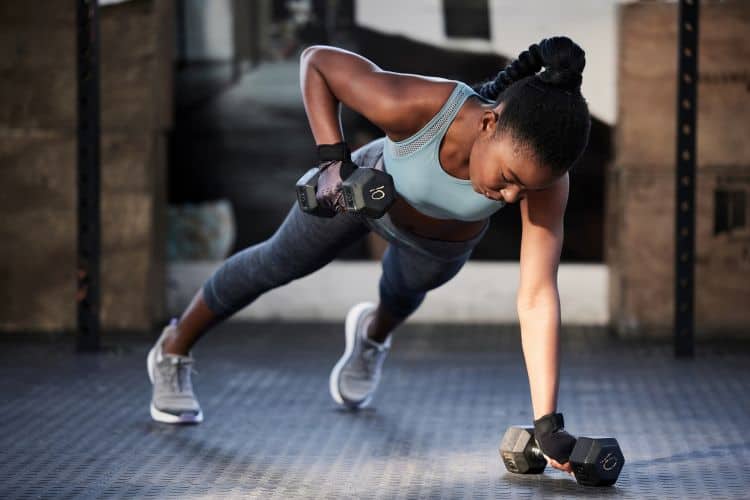
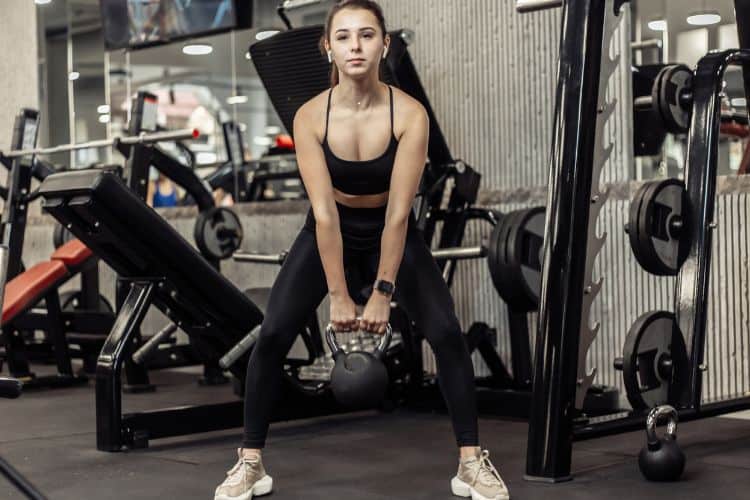
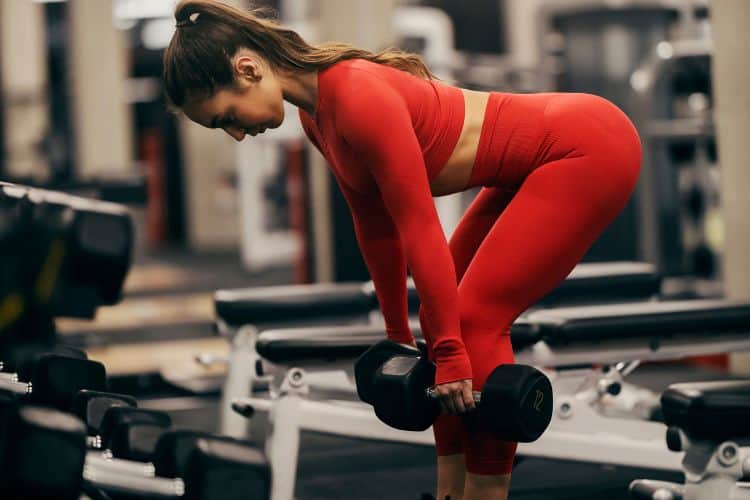
Power is the ability to apply force quickly. You use it when you rise briskly from a chair, climb stairs with purpose, lift a bag onto a shelf, or accelerate into a walk. A good power program develops that ability alongside strength and coordination. You do not need to jump, throw heavy weights, or train until you are breathless to practice it. With a pair of dumbbells, enough space to move, and three focused sessions a week, you can learn to move a manageable load with control and intent. This 4-week dumbbell power training plan combines a fast, technically sound movement at the start of each workout with slower strength exercises afterward. The fast reps are short and fresh; the strength work builds the foundation that supports them. Across four weeks, you will learn the movements, add a little work, raise the challenge when ready, and finish with a week that prioritizes crisp execution. The plan is designed for women who already know basic squats, hinges, rows, and presses, but it includes ways to make every session more approachable.
Strength describes how much force you can produce. Power adds a time element: how promptly you can produce it. In this program, a power rep has a deliberate setup, a quick lifting phase, and a controlled return. The goal is to make each repetition look clean and energetic, rather than to move the heaviest dumbbells available. If a rep slows markedly, becomes noisy, or pulls you out of position, the set has done its job.
That distinction shapes the workout order. After a warm-up, you perform a low-repetition power exercise while you are fresh. Then you complete two or three strength movements at a measured pace. The final exercise develops trunk stability or carrying capacity. Rest between power sets is part of the training, because it lets you repeat the movement with quality. This is a strength and power session, not a timed circuit.
Power can be trained without leaving the floor. A quick stand from a squat, an assertive hip extension in a swing-style movement, or a controlled push press all ask you to produce force rapidly. This plan uses a fast goblet squat ascent, a dumbbell push press, and a single-dumbbell hang clean option. If a clean is unfamiliar, the substitute provided gives you a practical route through the entire program.
Train on nonconsecutive days, such as Monday, Wednesday, and Friday. Workout A emphasizes a quick squat ascent and horizontal pulling. B pairs an overhead power movement with a hip hinge. Workout C brings the patterns together with an optional clean and unilateral strength work. Each session takes about 35 to 45 minutes, including the warm-up and cool-down. On days between, take an easy walk, do comfortable mobility work, or rest.
Use the same A, B, and C sequence each week. Do not cram missed workouts together: simply resume the next session after at least a day of recovery. If three days are too much for your current schedule, alternate A and B one week and C and A the next. You will progress more slowly than the three-day version, but you can still practice the movements consistently.
For the power exercises, choose a load that feels light to moderate and allows every rep to be sharp. For the strength exercises, the last rep should feel challenging while leaving roughly two or three good reps in reserve. A weight suitable for a squat may be too heavy for an overhead movement. Change dumbbells between exercises as needed.
Allow seven to nine minutes to prepare. Start with two minutes of easy marching or walking. Then perform eight unloaded hip hinges, eight comfortable bodyweight squats, six alternating reverse step-backs per side, and eight arm circles in each direction. Follow with six light rows and six light overhead reaches or presses. Repeat the sequence once if you still feel stiff.
Before the day’s first power exercise, do one practice set without weights and one with very light weights. Notice whether your feet stay planted, your trunk feels steady, and your movement path is predictable. Gradually increasing speed during the practice sets makes the first working set less abrupt. Take a breath between reps instead of rushing through them.
Hold one light dumbbell vertically at your chest. Lower into a squat under control for about two seconds, pause briefly if needed, then stand quickly while keeping both feet on the floor. Reset at the top. Perform three reps per set, with 75 to 120 seconds of rest between sets. Use the number of sets assigned for your current week below. The upward movement should feel decisive without becoming a jump or causing you to lean backward.
Lie on your back with knees bent and feet planted. Start with the upper arms near the floor and the dumbbells above your elbows. Press upward without bouncing your elbows off the floor; lower with control until the backs of the upper arms lightly touch. Complete three sets of eight to ten reps, resting 60 to 90 seconds. If getting into position with two weights feels awkward, use one dumbbell and switch arms halfway through the set.
Place one hand on a sturdy bench or chair and step back until your trunk is stable. Row the dumbbell toward your hip, pause briefly, and lower without twisting. Do three sets of eight to ten reps per side. Finish one side, then the other, and rest about 60 seconds before the next set. A stable torso helps your back muscles do the work instead of momentum.
Hold dumbbells at your sides and step back into a comfortable reverse lunge. Push through the front foot to return to standing. Complete two sets of six to eight per side, resting as needed. Then hold one dumbbell by your side and walk for 30 to 45 seconds per side for two rounds. Stay tall during the carry; do not let the weight pull your shoulders or ribs sideways. If lunges bother your knees, use a supported split squat with a shorter range.
Stand tall with one light dumbbell at shoulder height and the other hand free. Bend your knees a few inches while keeping your heels down, then drive through your legs to help press the dumbbell overhead. Lower it back to your shoulder with control and reset. Perform three reps per arm per set, with 75 to 120 seconds of rest between sets. Do not turn the dip into a deep squat or bend backward to finish the press. If overhead work is uncomfortable, substitute a fast-up incline push-up against a secure bench or wall for three to five reps per set.
Hold two dumbbells by your thighs with soft knees. Push your hips back and lower the weights along your legs until you feel tension in the backs of your thighs, then stand by driving your feet into the floor. Keep the weights close and your spine comfortably neutral. Perform three sets of eight to ten reps, resting 75 to 90 seconds. Focus on controlled lowering; there is no need to snap your back upright.
Hold one dumbbell at your chest, or two at shoulder height if that position feels natural. Sit between your hips to a depth you can manage without losing control and stand firmly. Do three sets of six to eight reps with about 75 seconds of rest. This is a strength exercise, so use a steady tempo rather than trying to race the weight upward.
Hinge at the hips and row two dumbbells toward your lower ribs for two sets of eight to ten reps. Keep your torso still. Then lie on your back with arms pointing upward and knees bent above your hips. Slowly extend the opposite arm and leg, return, and switch sides for two sets of six controlled reps per side. Exhale as the limbs move away. Shorten the reach if your lower back arches noticeably.
For the hang clean, hold one light dumbbell at your side. Hinge slightly, then extend your hips and knees to guide the weight upward close to your body. Receive it softly at shoulder height without banging it against your forearm. Lower carefully and reset before each rep. Perform three reps per side per set, resting 90 to 120 seconds. This movement takes practice; keep the load light and stop if you find yourself curling, yanking, or losing balance.
The simple substitute is a fast-up dumbbell deadlift. Hold two light dumbbells at your sides, hinge back, and lower to a comfortable height. Stand promptly through your legs and hips while keeping your feet planted, then lower slowly. Do four reps per set. This version trains a quick hip and leg drive without requiring a catch at the shoulder. Use it for all four weeks if it lets you move more confidently.
Use a stable, low step. Place your whole foot on top, stand through the leading leg, and step down deliberately. Complete three sets of six to eight reps per leg, holding light dumbbells only if bodyweight reps are steady. Avoid pushing hard off the trailing foot. If a safe step is unavailable, do a split squat while lightly holding a chair for balance.
Lie on the floor and hold the dumbbells with palms facing each other. Press smoothly, pause, and lower until the upper arms lightly contact the floor. Do three sets of eight reps. If you prefer variety, use a standing overhead press with a light load only when your shoulders move comfortably and you can keep your ribs stacked above your pelvis.
Complete two sets of ten supported rows per side, using the same stable position as Workout A. Then carry a dumbbell in each hand for two rounds of 30 to 45 seconds, resting about 60 seconds between rounds. Walk at a natural pace, breathe normally, and set the weights down before your grip fails or your posture changes. A short clear hallway works better than hurried turns in a cramped room.
Complete workouts A, B, and C once each. Perform three sets of the first power exercise in each workout and use the prescribed strength sets. Keep the power loads easy enough to make all repetitions look alike. For strength work, choose weights you could lift for at least two more reps at the end of each set. Write down your loads, reps, and a short note on balance or technique. Week one establishes a reference point; it is not a test of maximum effort.
Perform four sets of each workout’s first power exercise while keeping the same repetitions and rest periods. Maintain the strength exercise prescriptions. If week one felt controlled across every set, add a small amount of weight to one or two strength movements, or complete the top end of the stated rep range at the same weight. Change one variable at a time. If the fourth power set is slower than the third, return to three sets at the next session.
Keep four power sets with the same low rep counts. If you have a slightly heavier dumbbell and can still produce quick, clean reps, try it for the first one or two sets; otherwise keep the original load and aim for a more consistent drive. Add a fourth set to the first major strength movement after the power exercise in each workout: floor press in A, Romanian deadlift in B, and step-up in C. Keep the remaining strength work the same. Rest fully enough to preserve form.
Return to three power sets and the original strength set counts. Use the best manageable loads from weeks two and three without forcing an increase. Focus on identical starts, smooth finishes, and steady landings of the feet after step-ups. Near the end of the week, compare a few notes: Did you move the same weight more crisply? Can you complete more controlled reps at a familiar load? Does your balance feel better? These are useful signs of progress even if the dumbbells have not changed.
After week four, take several easier days or begin another cycle with small adjustments. You might use a slightly heavier pair for strength work or improve the range of motion you can control. Keep power reps low and precise rather than adding repetitions indefinitely.
The right power weight is usually lighter than the weight you would use for a slow set of eight. Start with a load that lets you accelerate from a stable position, finish without wobbling, and repeat the same path on every rep. If you can only make the first repetition fast, the set is too long, the weight is too heavy, or your rest is too short. Reduce one of those demands before progressing.
For strength work, pick a load that makes the final couple of reps demanding without changing your range or posture. Because the exercises recruit different muscles, write down a separate weight for each one. A goblet squat, row, floor press, and single-arm push press rarely need the same dumbbell. If your available weight jumps are large, progress by adding a rep within the listed range or improving control before moving up.
Your perceived effort can guide you. Power sets should feel technically focused rather than exhausting; strength sets can feel moderately hard. Leave the session knowing you could have completed another good set if necessary. Repeatedly grinding through slow, shaky reps moves the workout away from its intended purpose.
Yes. You need dumbbells, a stable floor, a clear walking area for carries, and optionally a sturdy chair or low step. Replace step-ups with split squats if you lack a safe platform. Check that an overhead press has enough clearance and that a chair will not slide during supported rows.
Use fewer reps or a lighter single dumbbell for power movements if the pair feels too heavy. For strength work, use a single dumbbell in a goblet position or perform one side at a time where practical. If even one dumbbell makes the push press slow or uncomfortable, choose the incline push-up option. Movement quality determines the variation, not the equipment you wish you had.
Increase it only after completing the assigned reps across all sets with steady technique and no major loss of speed on power work. For strength work, reach the upper end of the rep range while still leaving a couple of good reps in reserve. If the next available weight is too large a jump, keep the current weight and refine your control, range, or consistency.
For another focused power session, try this 35-Minute Dumbbell Power Training Workout. Browse the Top Dumbbell Power Moves for exercise ideas, or use the Dumbbell Power Strength Guide For Women Over 40 for an age-specific approach. If you want to build your strength base first, follow the 4-Week Dumbbell Strength Training Plan; when you are ready to advance your loading, read the Progressive Overload Dumbbell Workout Plan.
This 4-week dumbbell power training plan gives each session a clear job: practice fast, clean movement first, build full-body strength second, and recover well enough to repeat it. Start lighter than your ego suggests, record what you do, and protect the speed and quality of your power reps. By the final week, you should have a clearer sense of which movements feel strong, which need more practice, and how to progress your dumbbell training with purpose.
Stay up to date on the latest women’s health, fitness and lifestyle trends and tips.
