


Sign up for workout ideas, training advice, reviews of the latest gear and more.

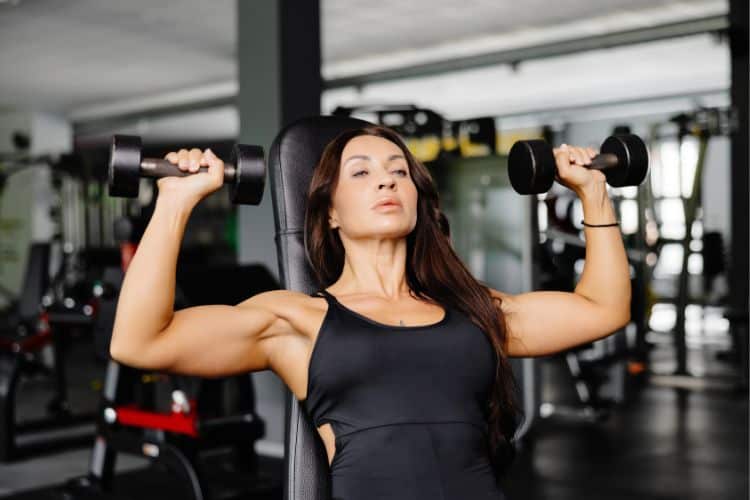
A chest and back antagonist superset workout is one of the most efficient ways to train the upper body without rushing through exercises or sacrificing good form. Instead of completing all your chest work and then moving to your back, you pair a pressing movement with a pulling movement. While the chest works, the back gets a brief break; while the back works, the chest recovers. This alternating push-pull format keeps the session moving, creates a satisfying training rhythm, and helps you develop balanced strength across the front and back of the upper body.
This workout is designed for women who want to build strength, improve posture, add muscle definition, and make better use of limited training time. It can be completed at a gym or adapted for a home setup with dumbbells, a bench, and resistance bands. The exercises target the pectoral muscles, upper and middle back, lats, rear shoulders, and supporting muscles of the arms and core. You will also learn how to select weights, structure each superset, protect your shoulders, and progress the workout over time.
An antagonist superset combines two exercises that train opposing muscle groups. The exercises are performed back to back with little or no rest between them, followed by a longer recovery period after both movements are complete. For the upper body, the chest and back are a natural pairing because the chest primarily contributes to pushing actions while the back performs many pulling actions.
For example, a dumbbell bench press is followed immediately by a dumbbell row. The press trains the chest, front shoulders, and triceps. The row trains the lats, rhomboids, trapezius, rear shoulders, and biceps. Once both exercises are complete, you rest before repeating the pair. One full sequence is considered one superset.
Antagonist supersets should not be confused with compound sets. A compound set pairs two exercises for the same muscle group, such as a chest press followed by a chest fly. That approach creates intense local fatigue. An antagonist superset distributes the work between opposing muscles, which can make it easier to maintain strength and technique throughout the session.
The greatest advantage of chest and back supersets is efficiency. Traditional strength training often includes long rest periods during which no other work is performed. With an antagonist pairing, the opposing muscles can recover while you complete the second exercise. You still rest between rounds, but you can accomplish a substantial amount of quality work in less time.
This approach also encourages balanced upper-body development. Many routines include plenty of pressing but not enough pulling, particularly when workouts are built around push-ups and chest presses. Consistently training the back alongside the chest can support healthier shoulder mechanics, better posture, and a more balanced appearance. The goal is not to force the shoulders backward all day, but to strengthen the muscles that help control the shoulder blades through a comfortable range of motion.
Moving between two exercises can also keep the heart rate moderately elevated without turning a purposeful strength session into random cardio. The clear push-pull structure is easy to follow and helps prevent one side of the upper body from receiving all the attention.
The pressing exercises primarily train the pectoralis major and pectoralis minor, with help from the anterior deltoids and triceps. Different pressing angles shift the emphasis slightly. A flat press works the chest broadly, while an incline press tends to place more demand on the upper chest and front shoulders. Fly variations train the chest through a wide arc with less assistance from the triceps.
The pulling exercises train the lats, rhomboids, trapezius, rear deltoids, and biceps. Rows emphasize the middle back and lats, while pulldowns bring the upper arms down toward the torso. Your core stabilizes the body during presses and rows, and your forearms work whenever you hold dumbbells, cables, or bands.
Use a resistance that makes the final two or three repetitions challenging while still allowing you to control the entire range of motion. You should finish most working sets with approximately one to three good repetitions left in reserve. If you could perform six more repetitions, the weight is probably too light for the prescribed range. If your shoulders lift, your torso twists, or you cannot complete the minimum repetitions, the weight is too heavy.
The correct weight will not be the same for every exercise. Treat each movement individually, start conservatively, and record your weights and repetitions to create a baseline for future progression.
Allow five to eight minutes for a focused warm-up. Begin with brisk walking, marching, or easy cycling, then perform controlled arm circles, wall slides, thoracic rotations, and band pull-aparts. Finish with one or two light sets of the first press and row. You should feel prepared, not tired.
Complete each pair before moving to the next one. Perform the chest exercise, transition directly to the back exercise, and then rest for 60 to 90 seconds. Repeat the pair for the prescribed number of rounds. Use two rounds per superset if you are a beginner, three rounds for a standard session, or four rounds on selected pairs if you are an experienced lifter with enough recovery capacity.
| Superset | Chest exercise | Back exercise | Repetitions | Rounds |
|---|---|---|---|---|
| A | Dumbbell bench press | One-arm dumbbell row | 8–12 each | 3 |
| B | Incline dumbbell press | Lat pulldown or band pulldown | 8–12 each | 3 |
| C | Dumbbell chest fly | Chest-supported dumbbell row | 10–15 each | 3 |
| D | Push-up | Cable face pull or band face pull | 8–15 each | 2–3 |
The listed repetition ranges are targets, not requirements to force through poor form. Stop the set when you can no longer maintain the intended technique. For one-arm rows, complete all repetitions on one side and then the other before resting or continuing.
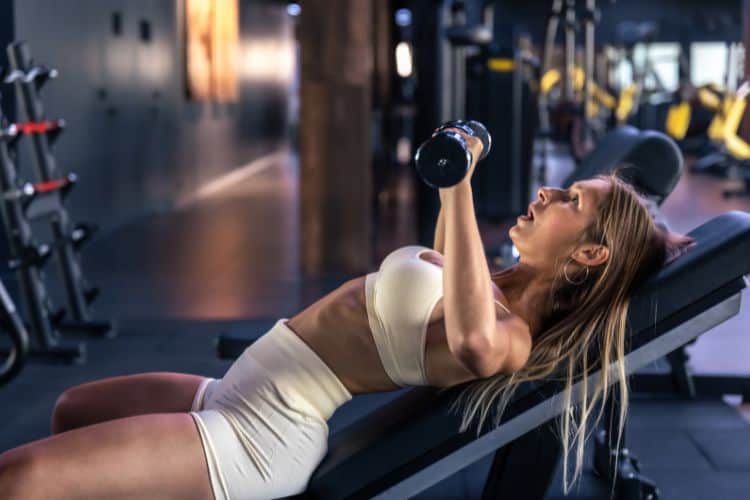
Lie on a flat bench with a dumbbell in each hand, feet planted firmly on the floor, and wrists stacked over the elbows. Draw the shoulder blades gently toward the bench without exaggerating the arch in your lower back. Lower the dumbbells with control until the elbows reach a comfortable depth, then press the weights upward. Keep the forearms relatively vertical and avoid slamming the dumbbells together at the top.
After the press, move into the one-arm dumbbell row. Support one hand on the bench, step the opposite foot back, and keep your spine long. Let the working arm extend without allowing the shoulder to collapse toward the floor. Pull the dumbbell toward your hip while keeping the elbow close to the torso. Pause briefly, lower the weight under control, and resist the temptation to rotate your body to lift it.
This foundational pairing should receive your best effort. Without a bench, complete the press on the floor and perform the row from a staggered stance with one hand supported on a stable chair.
Set the bench to a low or moderate incline. A very steep angle may turn the movement into more of a shoulder press. Hold the dumbbells near the upper chest, keep the wrists straight, and press up and slightly inward. Lower slowly until you reach a comfortable position without letting the shoulders roll forward.
For the lat pulldown, use a comfortable grip slightly wider than shoulder width. Sit tall, brace the core, and pull the bar toward the upper chest by driving the elbows down. Avoid swinging backward or pulling the bar behind the neck. Return the bar with control until the arms are extended and the lats are lengthened, but do not allow the weight stack to crash.
At home, use a resistance-band pulldown secured to a reliable overhead anchor. Pull the elbows toward the ribs, straighten the arms slowly, and always inspect the band and attachment before training.
Lie on a flat bench with lighter dumbbells held over the chest. Maintain a soft, consistent bend in the elbows. Open the arms in a wide arc until you feel a gentle stretch across the chest, then bring the weights back above the torso by squeezing the chest. Do not lower the elbows excessively below the body or turn the movement into another press. Flyes require far less weight than presses.
For the chest-supported row, set an adjustable bench to an incline and lie face down with the dumbbells hanging beneath the shoulders. Pull the elbows back and slightly out, bringing the weights toward the lower ribs. Pause without shrugging, then lower them slowly. Supporting the torso on the bench reduces momentum and lets you focus on the middle back.
With only a flat bench, use a bent-over dumbbell row. Hinge at the hips and keep the torso stable. If that position bothers your lower back, use supported one-arm rows instead.
Place the hands slightly wider than shoulder width for the push-up. Create a straight line from the head through the hips, brace the abdomen, and lower the chest between the hands. Keep the elbows angled diagonally rather than flared directly sideways. Press the floor away and finish without letting the lower back sag.
Modify the push-up by placing your hands on a bench, sturdy table, or wall. To increase the challenge, lower for three seconds, pause near the bottom, or elevate the feet if you already have strong mechanics.
Follow with a cable or band face pull. Set the anchor around face height, hold the rope or band with both hands, and step back until there is tension. Pull toward the forehead while guiding the hands apart and keeping the shoulders down. The goal is controlled movement through the rear shoulders and upper back, not maximum resistance.
Beginners can perform two rounds of each pair and stay near the lower end of the repetition ranges. Use floor presses or machine chest presses if a free-weight bench press feels unstable. Choose supported rows and neutral-grip pulldowns to make the setup easier to control. Elevated push-ups are an excellent option and can be progressed gradually by lowering the hand position over time.
It is also acceptable to rest briefly between the two exercises. Take 15 to 30 seconds to change position, adjust the equipment, and regain control. The purpose of antagonist supersets is to organize the workout efficiently; there is no benefit in rushing through an unsafe transition.
During the first few weeks, focus on consistent technique and a repeatable range of motion. When all sets feel controlled and you reach the top of the repetition range, increase the resistance by the smallest practical amount.
Experienced lifters can add a fourth round to the first two supersets, choose slightly heavier loads, or use slower eccentric repetitions. A three-second lowering phase increases time under tension without requiring a large jump in weight. Pauses can also be added at the stretched or contracted position when they can be performed comfortably.
For a strength emphasis, use six to eight repetitions on the bench press and row, followed by moderate ranges on the remaining pairs. Do not add every intensity technique at once; select one method, monitor recovery, and maintain high-quality movement.
Progressive overload means gradually increasing the training challenge as your body adapts. For this workout, the simplest method is double progression. Keep the same weight until you can complete the top of the target repetition range for every set with good form. Then increase the weight slightly and return to the lower end of the range.
For example, if you press the same dumbbells for 10, 10, and 9 repetitions, keep them until you achieve three controlled sets of 12. Then move to the next manageable weight and return to eight or nine repetitions. Better control, a fuller pain-free range, or a harder variation can also represent progress.
One common mistake is using the same load for exercises with very different strength demands. A weight that is appropriate for a row may be far too heavy for a reverse fly or face pull. Select resistance based on the movement rather than convenience.
Do not turn every set into a race. Take time to position the bench, secure the band, and establish a strong starting posture. During presses, avoid letting the shoulders roll forward; during rows, do not shrug toward the ears. Give the pulling half of every superset equal attention and never shorten the range simply to lift more weight.
Most women can perform this workout once or twice per week, depending on their experience, total training schedule, and recovery. If you train the full body three days per week, use selected supersets within one or two sessions rather than adding the entire workout on top of an already demanding plan. If you follow an upper-lower split, this routine can serve as one upper-body day.
Allow at least one recovery day before training the same muscles hard again. Remember that shoulders, biceps, and triceps also contribute, so consider how the workout fits beside dedicated arm or shoulder sessions. More exercise is not automatically better when performance, sleep, or joint comfort begins to decline.
End with a few minutes of easy movement and relaxed breathing. Gentle chest and lat stretches may feel good, but they should never be forced. Consistent sleep, sufficient food, hydration, and sensible training volume matter more than an elaborate cooldown. Balanced meals with protein and carbohydrates can support muscle repair and replenish energy.
Muscle fatigue and mild soreness can be normal after a new workout. Stop if you experience sharp pain, numbness, significant weakness, or worsening discomfort, and consult a qualified healthcare professional when appropriate.
Yes. Pairing presses with rows or pulldowns creates an efficient workout and supports balanced upper-body development, provided the session fits your weekly volume and recovery.
Yes, when sets are challenging, technique is consistent, volume is appropriate, and resistance progresses over time. Nutrition and recovery still matter.
Start with your priority. This routine begins with chest for simplicity, but you can perform the back exercise first when pulling strength is your primary goal.
Yes. Presses, one-arm rows, flyes, chest-supported rows, push-ups, and rear-delt rows create a complete dumbbell-only push-pull session.
Yes, when the exercises match your ability and joint comfort. Begin with manageable resistance, use supported variations when helpful, and progress gradually.
A chest and back antagonist superset workout offers a practical combination of strength, balance, and efficiency. By alternating a chest press or fly with a row, pulldown, or face pull, you can train opposing muscle groups in a structured format while keeping the session moving. The result is a comprehensive upper-body workout that fits into a busy schedule without treating good form as optional.
Begin with a thorough warm-up, choose weights you can control, and complete two or three rounds of each pairing. Focus on smooth repetitions and comfortable shoulder mechanics. As the workout becomes easier, add repetitions, increase resistance gradually, or introduce a more challenging variation. Consistency and measurable progression—not exhaustion for its own sake—will produce the strongest long-term results.
Continue building balanced upper-body strength with the Ultimate Dumbbell Only Back Workout for additional rowing variations. Beginners can improve their technique with these Beginner Dumbbell Exercises and learn How Heavy Women Should Lift before progressing their supersets. For an equipment-free training day, try this 30 Minute Bodyweight Back Workout, or use the 45 Minute Machine Only Upper Body Workout when you want to train your chest, back, shoulders, and arms at the gym.
Stay up to date on the latest women’s health, fitness and lifestyle trends and tips.
