


Sign up for workout ideas, training advice, reviews of the latest gear and more.


A busy day does not have to crowd strength training off your calendar. With a pair of dumbbells and half an hour, you can train your legs, glutes, back, chest, shoulders, arms, and core in one focused session. The key is to choose movements that cover different patterns, give each muscle group enough work, and leave enough time to move with control. This 30-minute dumbbell full body workout is designed for women who want a straightforward routine they can do at home or in the gym. You will warm up for four minutes, complete two 10-minute strength blocks, finish with a four-minute conditioning block, and cool down for two minutes. The exercises are adaptable: beginners can slow the pace and choose lighter weights, while experienced lifters can increase resistance or use the progression described later.
You do not need to turn every minute into a sprint. Strength improves when the repetitions are challenging and technically sound. Treat the clock as a way to organize the session, not as a reason to rush through squats or rows. Set out your weights, clear a little floor space, and begin.
Full body training lets you practice major movements more than once a week without needing a separate day for every muscle group. A squat or lunge trains the lower body, a hinge targets the muscles along the back of the legs, and pressing and pulling movements cover the upper body. Core work is woven into several of these exercises because your trunk must stay stable while you lift.
Dumbbells are especially useful when space and time are limited. They allow each arm to work independently and make it easy to adjust the load for different exercises. You might use heavier dumbbells for a Romanian deadlift than for a shoulder press. If you have only one pair, a slower lowering phase, a brief pause, or a few extra controlled repetitions can make lighter weights more demanding.
A realistic goal is two or three full body strength sessions per week, with recovery between harder sessions. If this routine is your only workout today, you can complete it as written. If you also run, cycle, or do HIIT, place the more demanding sessions where your legs and shoulders have time to recover.
Choose a pair of dumbbells that lets you complete the first round with clean form while making the last few repetitions feel challenging. Having a second, lighter pair helps with shoulder presses and lateral movements, but it is optional. A mat is useful for floor work, and a sturdy chair or bench can support a hand during rows if you prefer that position.
Use an interval timer set to 45 seconds of work and 15 seconds to change exercises. Every five exercises equals five minutes; repeat the sequence to complete a 10-minute block. During the work period, aim for deliberate repetitions rather than trying to reach a number at any cost. Stop early if technique starts to slip. Your remaining seconds become extra rest.
For the conditioning finish, use 40 seconds of work and 20 seconds of rest for four rounds. Keep the dumbbells light enough that you can maintain posture and breathe normally enough to stay in control. If you are new to exercise or returning after a break, check with a qualified clinician about restrictions that apply to you and begin conservatively.
Spend the first minute marching in place while swinging your arms comfortably. In the second minute, alternate bodyweight squats with a gentle reach overhead. For the third minute, practice unloaded hip hinges: soften your knees, send your hips back, and stand tall by pressing through your feet. In the fourth minute, alternate reverse lunges or step backs with arm circles. Start small and gradually increase your range of motion.
The warm-up should make the first weighted set feel familiar. If a squat or lunge bothers your knees, reduce the depth and try a supported version. If your shoulders feel stiff, spend an extra few seconds moving your arms through a comfortable range before pressing.
Work for 45 seconds, then take 15 seconds to move to the next exercise. Perform the following five moves in order and repeat the sequence once. The block lasts exactly 10 minutes.
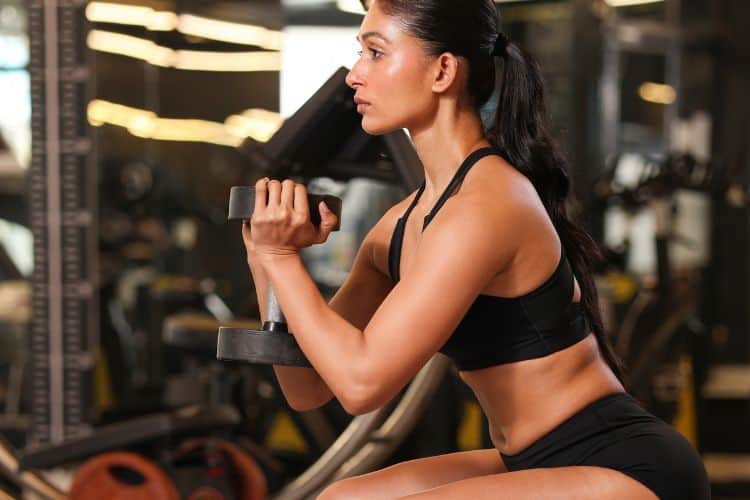
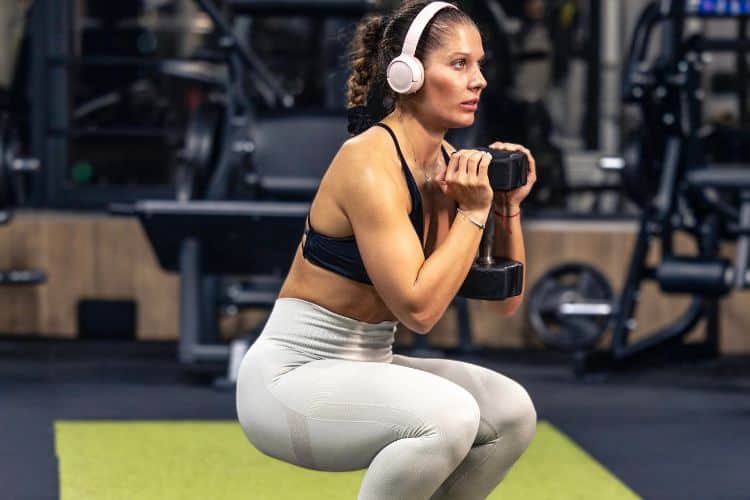
1. Dumbbell goblet squat. Hold one dumbbell vertically against your chest. Place your feet about shoulder width apart, sit down between your hips, and stand by pushing through your whole foot. Let your knees follow the direction of your toes. Keep the weight close to your body and choose a depth you can control. This movement trains your quads, glutes, and trunk.
2. Dumbbell bent-over row. Hold a dumbbell in each hand, soften your knees, and hinge at your hips until your torso angles forward. Pull your elbows toward your hips, pause briefly, and lower the weights without swinging. Keep your back in a comfortable, steady position. The row works the upper back and helps balance the pressing exercises later in the session.
3. Dumbbell Romanian deadlift. Stand tall with a weight in each hand. Keep a small bend in your knees and slide the dumbbells close to your legs as you move your hips back. Stop when you feel a manageable stretch along the back of your thighs, then drive your feet into the floor to stand. Avoid reaching the weights toward the floor at the expense of your back position. Your hamstrings and glutes should do much of the work.
4. Dumbbell floor press. Lie on your back with knees bent and feet planted. Start with elbows on or just above the floor and dumbbells near your chest. Press upward until your arms are nearly straight, then lower with control. Keep your wrists stacked over your forearms and your shoulder blades comfortably grounded. The floor limits how far your elbows travel behind your torso, making this a convenient home option for chest and triceps training.
5. Suitcase march. Hold a dumbbell at your side with one hand. Stand tall, keep your shoulders level, and slowly march in place. Switch hands halfway through the 45-second interval. Resist leaning toward or away from the weight. This simple carry variation challenges your grip and the core muscles that help you stay upright.
Repeat the goblet squat through the suitcase march once more. If you cannot switch weights within a 15-second transition, keep the lighter pair nearby or reduce the next interval to give yourself time to set up safely. Controlled movement matters more than perfect adherence to the beep.
Again, work for 45 seconds and transition for 15 seconds. Complete these five exercises twice. Together, the two blocks provide lower-body, upper-body, and core work without relying on a single exercise to do everything.
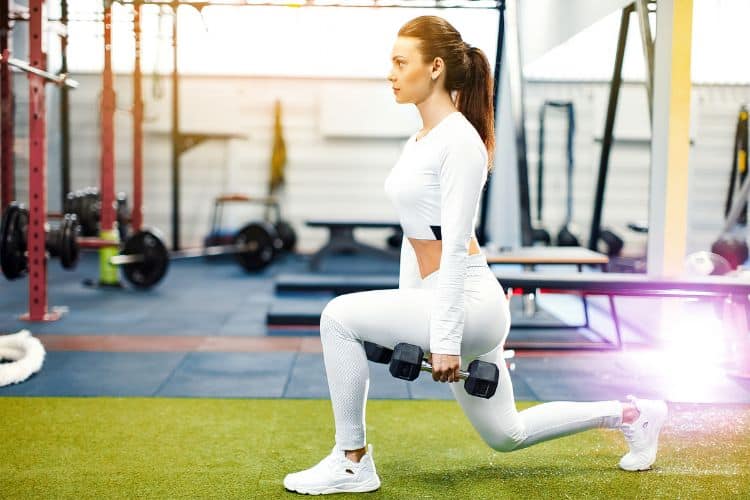
1. Alternating dumbbell reverse lunge. Hold dumbbells by your sides and step one foot back. Lower only as far as you can while keeping your balance, then push through the front foot to return to standing. Alternate legs. You can shorten the step, hold one dumbbell at your chest, or perform a supported split squat if changing feet feels unsteady.
2. Standing dumbbell shoulder press. Begin with weights near shoulder height and your palms facing inward or slightly forward. Brace your abdomen, keep your ribs from flaring, and press overhead through a comfortable path. Lower slowly. If standing overhead work is uncomfortable, use lighter weights, press one arm at a time, or substitute another set of floor presses.
3. Staggered-stance dumbbell row. Step one foot slightly back, hinge at the hips, and pull both dumbbells toward your lower ribs. A staggered stance can help you maintain a stable base as you row. Change which foot is forward on the second round. Keep your neck in line with your torso rather than lifting your chin to watch the mirror.
4. Dumbbell glute bridge. Lie on your back with knees bent and place one dumbbell across your hips, holding it securely with both hands. Press through your feet and lift your hips until your torso and thighs form a comfortable line. Pause, then lower with control. Avoid pushing so high that your lower back arches sharply. If the weight is awkward to position, do the bridge without it and pause longer at the top.
5. Dead bug with dumbbell hold. Lie on your back, raise your knees above your hips, and hold one light dumbbell with both hands above your chest. Slowly extend one leg toward the floor while keeping your torso steady, then return and switch legs. Keep the dumbbell still. If your back lifts or you feel strain, shorten the leg reach or keep both feet on the floor and alternate heel slides.
By the end of this block, your major movement patterns have all appeared: squatting, hinging, lunging, pressing, pulling, carrying, and resisting unwanted trunk movement. You may feel more fatigue on one side or in one exercise. Write that down for next time rather than compensating with rushed repetitions.
Set your timer for 40 seconds of work and 20 seconds of rest. Do one round each of a dumbbell squat to calf raise, alternating step-back lunges, a farmer march, and a bodyweight squat or brisk march. Hold the weights by your sides for the first two movements if your form remains steady; otherwise set them down. For the farmer march, hold one dumbbell in each hand and walk around your space or march in place without shrugging your shoulders.
This finish adds a modest cardiovascular challenge without demanding fast, technical lifts. Move at a pace you can sustain for each interval. If your goal today is strictly strength or your legs feel spent, replace the finish with easy walking. There is no special fat-burning effect from pushing through poor form in the last four minutes.
Walk slowly and let your breathing settle for about a minute. Then spend the final minute gently stretching your calves, hips, chest, or shoulders where you feel tension. Hold each stretch at a comfortable level without bouncing. You can take more time afterward if you have it, but the essential 30-minute workout is complete.
There is no single correct weight for every woman or every move. A load that feels easy for a deadlift might be too heavy for a shoulder press. Use effort and technique together: the first few repetitions should feel controlled, while the last few should require attention. You should still feel capable of one or two more clean repetitions when the interval ends on most sets.
If you finish every set well before the timer and could repeat the same number of reps with no difficulty, consider a heavier pair next time. If your shoulders rise during rows, your back rounds as you hinge, or you have to throw the dumbbells upward during presses, use a lighter pair or shorten the set. On unilateral or alternating exercises, give both sides roughly equal time even when one side feels stronger.
You can also use a rep target inside each 45-second interval. For example, complete eight to 12 controlled squats, then rest until the next exercise begins. Larger movements may fit fewer repetitions when the weights are challenging; alternating lunges may take longer because both legs need a turn. Keep a note of the weights and repetitions you achieve so that progress is measurable.
Begin with one round of each strength block rather than two, and use the extra time to practice the movements or take longer rests. You can also follow the full 30-minute clock with 30 seconds of work and 30 seconds of rest. Choose an unloaded squat or sit-to-stand from a chair, a supported row, and a bodyweight glute bridge until the positions feel familiar. Adding weights is useful only when you can repeat the movement comfortably.
Your first few sessions are a chance to learn how hard each interval feels. Start with weights you can lower slowly. Pay attention to balance on the reverse lunge and keep a stable stance before you begin each rep. Consistency over several weeks will serve you better than exhausting yourself on day one.
Use heavier dumbbells for squats, hinges, rows, and lunges while keeping the shoulder press weight appropriate for clean repetitions. Lower each rep for two to three seconds or pause at the bottom of a squat and the top of a row. Aim to complete slightly more high-quality work across the same intervals before you shorten rest periods.
If you already lift regularly, consider using this as one of several strength sessions, not the only training you do for months. A timed circuit is convenient, but longer rests and heavier sets on another day can help you keep progressing in the major lifts. The 30-minute version remains useful when your schedule is tight.
Every movement here can be performed without jumping. Replace the conditioning block with controlled marching and leave the weights on the floor whenever breathing or balance becomes the limiting factor. Use a shallow reverse lunge or supported split squat and choose a squat depth that suits your mobility. Keep the weights close to your body and place them down carefully, especially if you exercise in an apartment.
Try the session twice a week to start, leaving at least a day between demanding full body workouts. If recovery feels good and your schedule allows it, a third weekly session can work. You can alternate this routine with a walk, cycling, mobility practice, or another workout you enjoy. The exact weekly schedule matters less than being able to repeat quality training consistently.
Over four weeks, keep a simple training log. During week one, learn the sequence and note your weights. In week two, aim for smoother repetitions or one additional controlled rep in a few intervals. Week three, increase the load on exercises that have become easy while keeping your technique stable. In week four, continue at that level or reduce the workload slightly if you feel unusually tired. Progress does not have to happen in every exercise at once.
If you are sore from a previous session, judge whether you can still move normally and control the weights. A lighter session or an extra recovery day can be a better choice than forcing a hard circuit. Sleep, food, and your overall activity also affect how ready you feel to lift.
The first mistake is choosing a load based on the hardest exercise and then using it for everything. Your hips and legs can often manage more resistance than your shoulders. If you have multiple pairs, change weights between movements. If you have one pair, adjust your pace and range of motion so that each exercise remains controlled.
Another mistake is letting the timer set your technique. A row performed with momentum and a squat that loses balance do not become better because the interval is nearly over. Put the dumbbells down for a few seconds, reset, and finish with clean reps. Your goal is useful work over the full session, not the greatest possible number on every interval.
Finally, avoid repeating the same weights forever without checking whether the exercises still challenge you. Once you can move through a set with steady form and plenty of energy left, gradually add reps, use a slightly heavier dumbbell, or lengthen the lowering phase. Those small changes give your muscles a reason to adapt.
Yes. A focused session can build strength when the exercises challenge you, the loads or repetitions progress over time, and you repeat the workout often enough. Thirty minutes is enough to cover major movement patterns, though the amount of strength you gain will depend on your starting point, consistency, recovery, and how challenging the sets are.
Strength training can support weight management by helping you maintain or build muscle while improving fitness. Weight change depends on your overall eating patterns, activity, and other factors across time. There is no need to rush the circuit or chase soreness to make the session worthwhile.
Yes. Hold one dumbbell at your chest for squats and lunges, row one arm at a time, and perform the Romanian deadlift with the weight held in both hands. For the floor press and shoulder press, alternate sides and split each interval evenly. Keep the suitcase march as written, switching hands halfway through.
Try a stationary split squat while holding a chair for balance, or replace it with a sit-to-stand from a sturdy chair. Both options keep lower-body work in the session. Choose a range of motion that you can control without discomfort, and increase it gradually if appropriate.
Most people benefit from recovery between challenging sessions that train the same muscles. Start with two or three nonconsecutive days per week and use easier movement on other days. If you want to be active daily, vary the intensity rather than repeating the full strength circuit hard every day.
A useful full body dumbbell workout does not require complicated combinations or a long equipment list. Warm up, move through the two strength blocks with intent, finish at a pace you can control, and note what you accomplished. Repeat the session consistently, make small adjustments as you get stronger, and let the weights serve the movement rather than the clock. Half an hour is enough time to build a solid strength habit.
If you are learning the basics, start with our Beginner Dumbbell Workout Plan For Women. For another way to train your whole body in half an hour, try the 30 Minute Dumbbell Circuit Workout or the 30 Minute Dumbbell Density Workout For Women. When your current weights begin to feel easier, use the Progressive Overload Dumbbell Workout Plan to guide your next steps. For a slower change of pace that still challenges your whole body, explore the 30 Minute Dumbbell Isometric Workout.
Stay up to date on the latest women’s health, fitness and lifestyle trends and tips.
