


Sign up for workout ideas, training advice, reviews of the latest gear and more.

Progressive overload with light weights is one of the most practical ways to become stronger, improve muscle definition, and keep workouts challenging without constantly buying heavier equipment. Although progressive overload is often described as adding more weight to an exercise, load is only one part of the process. You can also create progress by performing more repetitions, increasing your range of motion, slowing the lowering phase, improving technique, reducing rest periods, adding sets, or choosing a more demanding variation.
This makes light-weight training useful for beginners, women exercising at home, people returning after a break, and experienced lifters who want a joint-friendly training phase. A pair of light dumbbells can remain effective much longer than many people expect when the exercises are performed with control and taken close enough to muscular fatigue. The key is to make the work gradually more demanding instead of repeating the same comfortable routine every week.
Progressive overload does not mean turning every workout into an exhausting test. It means giving your muscles a slightly greater challenge over time while maintaining good form and recovering between sessions. Small, measurable improvements accumulate. One extra repetition, a slower tempo, or a cleaner set may seem minor, but those changes can create meaningful results over several weeks.
Progressive overload is the gradual increase of training demands placed on the body. When you perform resistance exercises, your muscles adapt to the challenge. If the workout remains identical after your body has adapted, it becomes less effective at stimulating additional strength or muscle growth. Progress requires a new reason for your body to adapt.
Adding weight is the most obvious way to create that new challenge, but it is not the only way. The body responds to muscular tension, effort, range of motion, total work, movement quality, and training frequency. Light weights can therefore support progressive overload when one or more of these variables improve in a planned way.
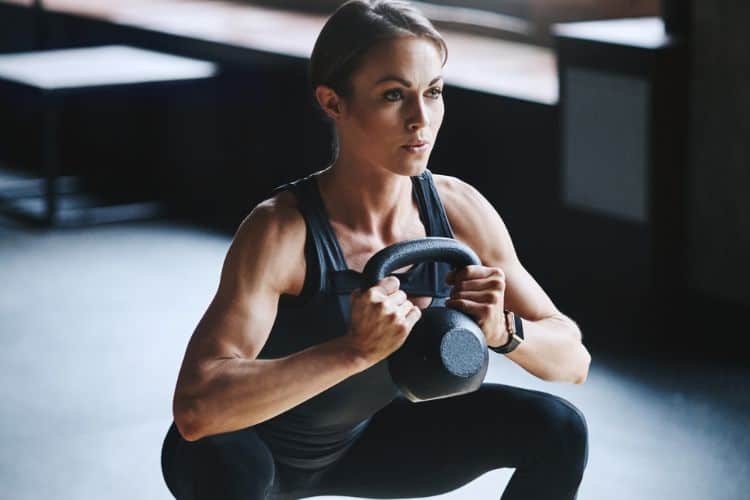
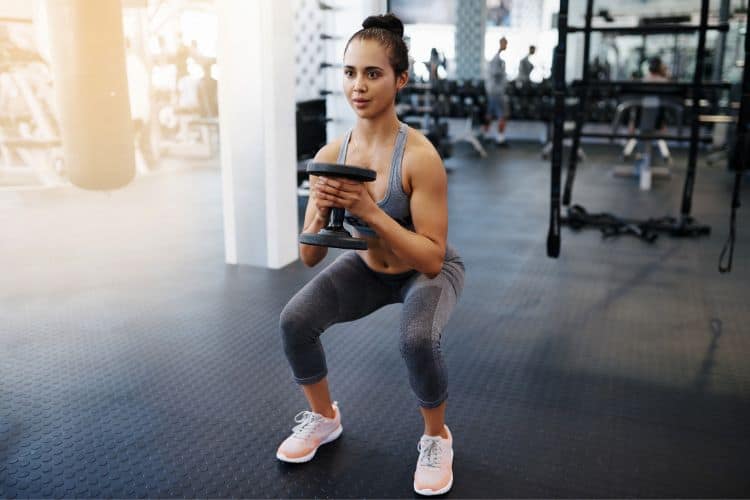
Imagine performing three sets of 10 goblet squats with one dumbbell. During the first week, the final repetitions may feel difficult. After several sessions, the same sets may feel easy. You could then perform 12 repetitions, slow each lowering phase, pause at the bottom, or add another set. Each option increases the demand without requiring a heavier dumbbell.
Light weights can help build muscle when the target muscles perform enough challenging work. A set should generally continue until only a few good repetitions remain before form would begin to break down. This is often described as training close to muscular failure. The weight may feel easy during the opening repetitions, but the set should become noticeably difficult near the end.
For example, a light pair of dumbbells may not challenge your legs during eight ordinary squats. The same dumbbells can become demanding during 18 controlled squats with a three-second lowering phase and a pause at the bottom. The external load has not changed, but the muscle has experienced more time under tension and a higher level of fatigue.
Light weights are particularly effective for exercises such as lateral raises, reverse flyes, triceps extensions, curls, lunges, split squats, and high-repetition presses. Large muscle groups may eventually require harder variations or heavier resistance, but creative programming can significantly extend the usefulness of lighter equipment.
The phrase “light weights” describes the load, not the effort. A productive working set should require concentration and control. If you finish every set knowing you could have performed 15 more repetitions, the stimulus is probably too small. If you reach the end of the set with two or three quality repetitions left, the weight can still be useful.
Your goal is not to chase discomfort for its own sake. Instead, select a repetition target and perform each repetition with consistent form. As the set continues, the movement should become challenging while remaining controlled. Stop when you reach your planned target, when your technique changes, or when you have only a small number of clean repetitions in reserve.
There are several reliable ways to make light-weight exercises harder. Choose one progression method at a time whenever possible. Changing several variables simultaneously makes it difficult to tell what caused improvement and can increase fatigue too quickly.
Adding repetitions is the simplest progression. If you begin with three sets of 10 repetitions, aim for three sets of 11 during the next workout. Continue until you reach the top of a predetermined range, such as 15 or 20 repetitions.
A repetition range creates structure. You might use 10 to 15 repetitions for presses, rows, squats, and deadlifts, then 12 to 20 repetitions for curls, raises, and kickbacks. Begin at the lower end with clean technique. Add repetitions as you become stronger. Once every set reaches the top of the range, increase another variable or advance the exercise.
Increasing the number of sets raises total training volume. Moving from two sets to three gives the muscles more work even when the weight and repetitions stay the same. This method is useful when your current sets are challenging but your overall workout volume is still modest.
Do not add sets indefinitely. Most people benefit from a practical limit based on their schedule and recovery. Once you are performing three or four quality sets, it is often better to improve another variable rather than continuing to lengthen the workout.
Tempo describes how quickly you perform each part of a repetition. Slowing the eccentric, or lowering, phase increases time under tension and makes light resistance feel heavier. A three-second lowering phase is a useful starting point for squats, lunges, rows, chest presses, and biceps curls.
For a tempo squat, lower for three seconds, pause briefly, stand with control, and reset. Ten repetitions performed this way can be considerably harder than 10 quick repetitions. Avoid moving so slowly that your position becomes awkward. The goal is controlled tension, not an artificial slow-motion contest.
Pauses remove momentum and force the muscles to maintain tension. Hold the bottom of a squat, the stretched position of a chest press, or the top of a glute bridge for one to three seconds. A pause also improves body awareness and can help you identify where technique begins to change.
Isometric holds can be placed at the end of a set as well. After completing lateral raises, hold the dumbbells partway up for several seconds. Following glute bridges, maintain the top position while squeezing the glutes. These techniques intensify the exercise without adding load.
A larger, controlled range of motion can make an exercise more demanding and improve strength through more of the movement. You might gradually deepen a squat, lower farther into a split squat, or allow a full stretch during a dumbbell row while keeping the shoulder controlled.
Range should increase only while alignment and comfort remain good. More depth is not automatically better if it causes pain, loss of balance, or compensatory movement. Use the largest range you can control for the intended exercise.
Shortening the rest between sets increases workout density, meaning that you perform the same work in less time. If you currently rest for 90 seconds, try 80 seconds, then 70 seconds over several weeks. This can improve muscular endurance and make a light-weight circuit more challenging.
Rest reduction is not ideal for every goal. If you become so breathless that muscle performance or technique declines, restore a longer rest period. Strength-focused compound movements typically need more recovery than smaller isolation exercises.
Better form is a legitimate type of progression. Using less momentum during a curl, maintaining a stable torso during a row, or keeping tension in the glutes during a bridge makes the target muscles work more effectively. A technically cleaner set may be more demanding than a heavier but poorly controlled one.
Record occasional sets or train near a mirror when appropriate. Look for consistent depth, smooth speed, stable joints, and equal movement on both sides. Technique improvements provide a foundation for every other progression method.
Unilateral movements train one side at a time. A single-leg Romanian deadlift, split squat, one-arm shoulder press, or one-arm row places more demand on each working limb and challenges balance and core stability. The same dumbbell that feels light during a two-arm exercise may feel appropriately difficult when one side performs most of the work.
Unilateral training can also reveal strength differences. Begin with the less confident side and match its number of repetitions with the stronger side. Do not add extra repetitions only to the dominant side.
Exercise progression changes the leverage, stability, or mechanics of a movement. A standard squat can progress to a narrow-stance squat, split squat, rear-foot-elevated split squat, or single-leg sit-to-stand. A floor push-up can progress through a lower incline, a slower tempo, a pause, or a deficit variation.
The best progression is a small step beyond your current ability. A dramatic leap can force compensation and interrupt consistency. Select a variation that allows you to maintain control within the intended repetition range.
A superset combines two exercises with little rest between them. You can pair exercises for different muscle groups, such as a squat and shoulder press, or target the same area with two complementary movements. Same-muscle supersets create more local fatigue and can make light weights very effective.
A mechanical drop set begins with a difficult variation and continues with an easier variation using the same load. You might perform bent-over reverse flyes, then transition to rows. For the lower body, you could begin with split squats and finish with regular squats. These techniques are demanding, so use them selectively rather than for every exercise.
Double progression is one of the easiest systems to track. First, increase repetitions within a chosen range. After reaching the top of the range for every set, make the movement more difficult. With access to heavier weights, the second progression would normally be a load increase. With light weights, you can instead slow the tempo, add a pause, increase the range of motion, or select a harder variation.
Suppose your goal is three sets of 10 to 15 split squats per side. In week one, you complete 10, 10, and 9 controlled repetitions. Over time, you build toward 15 repetitions in all three sets. At that point, you begin using a three-second lowering phase and return to 10 repetitions. You now have a fresh progression cycle without changing the dumbbells.
This method prevents random workouts. Each session has a clear target, yet progression remains gradual enough to protect technique and recovery.
This three-day full-body schedule can be performed with a pair of light dumbbells. Train on nonconsecutive days when possible, such as Monday, Wednesday, and Friday. Begin with five to eight minutes of comfortable movement, including marching, arm circles, hip hinges, bodyweight squats, and practice repetitions of the first exercise.
Perform goblet squats for three sets of 10 to 15 repetitions, followed by dumbbell floor presses for three sets of 10 to 15. Continue with reverse lunges for three sets of 8 to 12 repetitions per leg and standing shoulder presses for three sets of 10 to 15. Finish with dead bugs for three controlled sets of 8 to 12 repetitions per side.
Rest for approximately 60 to 90 seconds after the compound exercises and 45 to 60 seconds after the core work. During the first week, select repetition totals that leave two or three good repetitions available at the end of each set.
Begin with dumbbell Romanian deadlifts for three sets of 12 to 15 repetitions. Perform one-arm dumbbell rows for three sets of 10 to 15 per side, then complete glute bridges for three sets of 15 to 20. Add bent-over reverse flyes for two or three sets of 12 to 20 and finish with suitcase marches for three sets of 30 to 45 seconds per side.
Focus on position rather than speed. Keep the spine neutral during the Romanian deadlift and row, and allow the hips to move backward during the hinge. During the suitcase march, stand tall and resist leaning toward or away from the dumbbell.
Perform split squats for three sets of 8 to 12 repetitions per leg, one-arm floor presses for three sets of 10 to 15 per side, and staggered-stance Romanian deadlifts for three sets of 10 to 15 per leg. Follow with lateral raises for three sets of 12 to 20 and a biceps curl-to-triceps extension superset for two or three sets of 12 to 20 repetitions each.
This session increases the challenge by placing more work on one side at a time. Move deliberately and use a wall or sturdy chair for balance during split squats if needed. Assistance for balance does not reduce the exercise’s value; it may help the working leg produce more controlled effort.
During week one, establish your starting point. Use a moderate repetition total, leave two or three repetitions in reserve, and record every set. The goal is to learn the movements and create a reliable baseline.
In week two, add one repetition to as many sets as possible while preserving technique. You do not need to progress every exercise in the same session. Improvement may happen faster in squats than in lateral raises, or faster on one side than the other.
During week three, continue adding repetitions until you approach the top of each range. If you already reach the upper limit on all sets of an exercise, add a one-second pause at the most challenging point and return to the lower end of the range.
In week four, use a three-second lowering phase on the first two exercises of each workout. Keep the other movements at their previous tempo. This prevents the entire session from becoming excessively long or fatiguing.
During week five, add one set to one major exercise per workout or progress to a slightly harder variation. For example, change regular lunges to deficit reverse lunges only if you can control the additional range.
In week six, try to outperform week five by a small amount. Add a repetition, improve the pause, or complete the same work with slightly shorter rest. After the sixth week, review your log. If fatigue is high, take a lighter week by reducing sets before beginning another progression cycle.
The correct weight depends on the exercise, your current ability, and the number of repetitions planned. A weight is useful when you can maintain good form while the final repetitions feel challenging. The last few repetitions should slow naturally, but you should not need to swing, bounce, twist, or shorten the movement to finish.
Use repetitions in reserve as a guide. If you stop a set and believe you could perform two more clean repetitions, you have approximately two repetitions in reserve. For most working sets, finishing with one to three repetitions in reserve provides a productive balance between effort and recovery. Beginners can stay slightly farther from failure while learning technique.
If a set ends and you could easily perform 10 or more additional repetitions, increase the challenge. Add repetitions, slow the tempo, introduce a pause, or select a harder variation. If you cannot reach the bottom of the target range with sound form, simplify the movement or reduce the resistance.
Progress does not need to happen during every workout. Sleep, stress, nutrition, hormonal changes, and prior activity can affect daily performance. Look for an upward trend across several weeks rather than expecting a personal record every session.
For each exercise, attempt a small improvement when the previous workout felt controlled and recovery was good. That might mean one additional repetition in only the first set. Once you can repeat the improvement across all sets, it becomes your new baseline.
Avoid increasing repetitions, sets, tempo, range, and workout frequency all at once. Change one main variable, allow the body to adapt, and then decide whether another progression is needed.
A simple training log is essential when the available weights do not change. Record the exercise, dumbbell weight, sets, repetitions, tempo, rest time, and exercise variation. Also note how many repetitions you felt remained at the end of the set.
Detailed tracking prevents accidental stagnation. Three sets of 15 squats performed with a three-second lowering phase are different from three sets of 15 performed quickly. Without recording tempo, both workouts may appear identical even though the training stimulus changed.
Use brief notes rather than creating a complicated system. An entry could read: “Goblet squat, 10 pounds, 3 x 15, three-second lower, two reps in reserve.” At the next workout, you can aim for a longer pause, one additional set, or a more difficult squat variation.
Adding repetitions, cutting rest, slowing tempo, and adding sets in the same week can create a large spike in training demand. This makes soreness and fatigue more likely and hides which change was effective. Progress one primary variable at a time.
Fast repetitions can use momentum instead of muscular control. This often happens when someone tries to make a light weight feel challenging by racing through a long set. Use a smooth tempo and keep the target muscle engaged throughout the movement.
Light weights often require more repetitions before the set becomes difficult. If you stop only because you reached an arbitrary number, you may miss the productive part of the set. Use a repetition range and assess how much effort remains.
Training close to failure can make light weights effective, but complete failure is not required on every set. Constantly pushing until another repetition is impossible may reduce technique, increase fatigue, and interfere with the next exercise. Save all-out efforts for occasional, appropriate sets.
Muscle soreness can occur after a new exercise or training method, but it is not a scorecard. Progress is better measured through improved repetitions, control, range of motion, exercise difficulty, and consistency. A productive workout does not have to leave you sore.
Muscles adapt between workouts. Schedule recovery days, eat balanced meals with adequate protein, stay hydrated, and make sleep a priority. If performance declines for several sessions, motivation drops, or soreness does not resolve, reduce training volume temporarily.
Light weights can remain challenging through higher repetitions and advanced variations, but they are not unlimited. If you can perform very high repetitions with excellent form and still remain far from fatigue, a heavier load may be the most efficient next step. This is especially true for strong lower-body movements such as squats, deadlifts, and hip thrusts.
Heavier weights also make it easier to focus on maximal strength, which is best developed with resistance that limits the number of repetitions you can perform. If your primary goal is to lift heavier objects or improve a low-repetition strength test, access to progressively heavier resistance will eventually be important.
That does not make light-weight training unsuccessful. It simply means your body has adapted. Adjustable dumbbells, resistance bands, a weighted backpack, or gym equipment can open a new progression path. You can also keep light weights for accessory exercises and higher-repetition sessions.
Warm up with movements that resemble the exercises in your workout. Start each new variation conservatively, especially when it adds range of motion, instability, or a long isometric hold. Keep the movement controlled and stop if you feel sharp pain, dizziness, numbness, or unusual discomfort.
Muscular fatigue and a controlled burning sensation can occur during higher-repetition training, but joint pain is not a goal. Adjust your stance, reduce the range, switch the exercise, or seek guidance from a qualified professional if discomfort continues. Anyone returning after an injury or managing a medical condition should follow advice from an appropriate healthcare professional.
Give yourself time to adapt. Tendons, joints, and connective tissues may progress at a different pace from motivation or cardiovascular fitness. Sustainable overload is gradual enough that you can repeat it consistently.
Yes. Add repetitions, sets, pauses, slower eccentric phases, longer ranges of motion, unilateral exercises, or more difficult variations. You can also reduce rest slightly or perform the same amount of work in less time. Track the exact method so you know the workout is becoming more demanding.
Many exercises work well in the range of 10 to 20 repetitions, although the useful range can be higher when the load is very light. The set must become challenging near the end while technique remains stable. There is no single perfect number for every movement.
Progressive overload with light weights is well suited to beginners because it allows time to learn movement patterns and build consistency. Beginners should initially prioritize technique and stop with several good repetitions in reserve. As confidence improves, effort and training volume can gradually increase.
“Toning” generally refers to developing muscle while managing overall body fat. Light resistance can contribute to muscle development when sets are challenging and progression is consistent. Nutrition, daily activity, recovery, and genetics also influence how muscle definition appears.
Increasing repetitions is usually the simplest first step because it adds a small amount of work without lengthening the workout significantly. Once you reach the top of your target range, add a set, adjust tempo, or progress the exercise. Choose the option that supports your goal and recovery.
The answer varies by exercise and training experience. Smaller-muscle exercises may remain challenging for months, while lower-body compound movements may outgrow light dumbbells sooner. Continue using the same weights as long as you can create a meaningful, measurable challenge with good form.
Progressive overload with light weights is not a compromise. It is a flexible training approach that rewards consistency, control, and thoughtful programming. More weight is one progression tool, but stronger performance can also mean more repetitions, cleaner technique, a longer range of motion, a slower tempo, a harder variation, or the same work completed with less rest.
Start with a repeatable routine, record your results, and change one variable at a time. Keep most working sets challenging but controlled, and allow recovery between sessions. When the current load no longer provides an efficient stimulus, progress to heavier resistance if it is available. Until then, light weights can deliver demanding, productive workouts and help you build a strong foundation for long-term fitness.
Build on this light-weight progressive overload plan with the 5 Day Full Body Dumbbell Workout Plan for Total Strength, then learn how to judge resistance with How Heavy Should Women Lift? A Beginner Dumbbell Guide. Women looking for age-specific progression can follow Progressive Overload for Women Over 40, while the 30 Minute Dumbbell Density Workout for Women offers another effective way to increase training demands without a long session. If you are new to resistance training, start with the Beginner Dumbbell Workout Plan for Women to practice foundational movements and build confidence.
Stay up to date on the latest women’s health, fitness and lifestyle trends and tips.
