


Sign up for workout ideas, training advice, reviews of the latest gear and more.


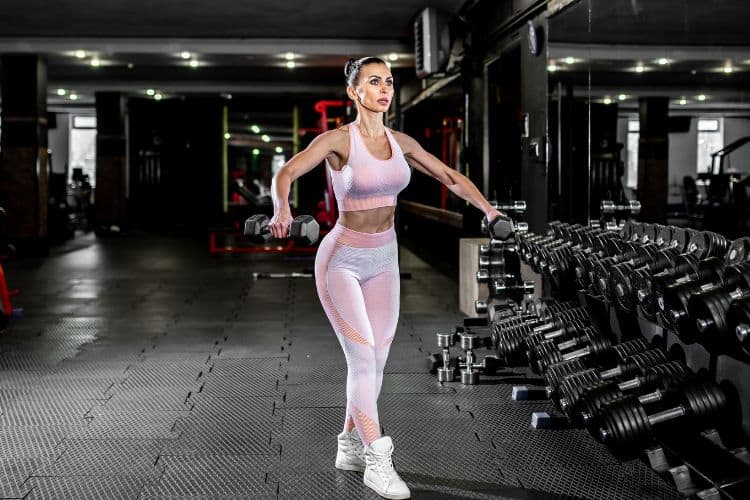


A 12-week progressive overload workout plan is one of the most effective ways to build strength, increase lean muscle, and improve overall fitness without constantly changing exercises. Instead of relying on random workouts, progressive overload gives your body a clear reason to adapt. You gradually increase the demands placed on your muscles by lifting more weight, performing additional repetitions, improving your technique, or completing more challenging variations.
This 12-week workout plan uses four weekly strength-training sessions divided into upper-body and lower-body workouts. The structured schedule allows every major muscle group to be trained twice per week while still providing sufficient recovery. Although the program can be completed at a gym, most exercises can also be performed at home with dumbbells, an adjustable bench, and resistance bands.
The goal is not to increase the weight during every workout at any cost. Successful progressive overload depends on making small, sustainable improvements while maintaining good form. Over the next 12 weeks, you will move through three training phases that gradually increase volume, weight, and intensity.
Progressive overload is the process of gradually making your workouts more demanding. When your muscles repeatedly perform the same exercises with the same weight and number of repetitions, they eventually become efficient at handling that workload. Once your body has adapted, it has little reason to become stronger or build additional muscle.
To continue progressing, you must introduce a slightly greater challenge. The most common method is increasing the amount of weight you lift. However, adding weight is only one form of progressive overload. You can also perform more repetitions, add another set, improve your range of motion, slow down the lowering phase of an exercise, reduce unnecessary rest time, or use a more difficult exercise variation.
Progressive overload should be gradual. Adding too much weight too quickly can interfere with your technique and increase the risk of joint pain or injury. A small increase completed with controlled form is more productive than a large increase that causes you to rush through the movement.
Twelve weeks provides enough time to create meaningful changes without making the program feel endless. During the first few weeks, you become familiar with the exercises and establish appropriate starting weights. The middle portion of the plan builds training volume and strength. The final phase introduces heavier resistance and more challenging working sets.
Following a structured plan can improve muscular strength, endurance, stability, and body composition. Resistance training may also support stronger bones, healthier joints, improved posture, and greater confidence with everyday activities. If fat loss is one of your goals, preserving or building muscle can help you maintain a more active lifestyle while following a balanced nutrition plan.
Another advantage is that progressive overload makes your progress measurable. Instead of judging a workout only by how tired or sore you feel, you can look at improvements in weight, repetitions, technique, and exercise quality.
This plan includes two lower-body and two upper-body workouts each week. A practical schedule is to complete the first lower-body workout on Monday, the first upper-body workout on Tuesday, the second lower-body workout on Thursday, and the second upper-body workout on Friday.
Wednesday and the weekend can be used for recovery, walking, mobility work, or gentle recreational activity. You can rearrange the schedule, but avoid training the same major muscle groups on consecutive days. Most participants benefit from at least one full rest day every week.
Each workout should take approximately 45 to 70 minutes. The exact duration will depend on the phase of the plan, your rest periods, and how much equipment you need to adjust between exercises.
Choose a starting weight that allows you to complete every repetition with controlled technique while leaving approximately two or three good repetitions in reserve. If the prescribed range is 10 to 12 repetitions, you should finish the set feeling challenged but reasonably confident that you could perform two more repetitions if necessary.
A weight is probably too heavy if you cannot reach the bottom of the repetition range, shorten your range of motion, hold your breath excessively, or use momentum to complete the exercise. Conversely, the resistance may be too light if you finish the highest number of repetitions and feel as though you could easily perform five or more additional repetitions.
Starting slightly lighter during the first week gives you room to progress. The purpose of Week 1 is to establish a baseline, not to test your absolute maximum strength.
Begin each session with five to ten minutes of easy movement. Walking, cycling, or using an elliptical can gradually raise your body temperature. Follow this with dynamic movements related to the upcoming workout.
Before a lower-body session, perform bodyweight squats, hip hinges, glute bridges, and alternating reverse lunges. Before an upper-body workout, use arm circles, band pull-aparts, wall slides, and light rows.
Complete one or two warm-up sets before the first major strength exercise. These lighter sets prepare the working muscles and allow you to rehearse your technique without creating unnecessary fatigue.
Begin with a goblet squat or barbell back squat. Perform the movement with your feet approximately shoulder-width apart, brace your core, and lower yourself as far as your mobility comfortably allows. Keep the entire foot connected to the floor and drive upward without allowing the knees to collapse inward.
Follow the squat with Romanian deadlifts. Hold dumbbells or a barbell in front of your thighs, soften your knees, and push your hips backward. Lower the weights while maintaining a neutral spine, then squeeze your glutes as you return to standing.
Complete reverse lunges as your unilateral exercise. Step backward, lower both knees under control, and push through the front foot to return to the starting position. Finish the workout with hip thrusts or glute bridges and standing calf raises.
During the first phase, perform three sets of 10 to 12 repetitions for each exercise. For reverse lunges, complete 10 to 12 repetitions on each side. Rest for approximately 60 to 90 seconds between sets.
Start with a dumbbell or barbell bench press. Keep your feet stable, gently draw your shoulder blades toward the bench, and lower the weight under control. If you train at home without a bench, use a dumbbell floor press.
Next, perform a one-arm dumbbell row or a seated cable row. Focus on pulling your elbow toward your hip rather than lifting the weight with your hand. Avoid rotating your torso as you reach the top of the movement.
Continue with a seated or standing shoulder press, followed by a lat pulldown or assisted pull-up. Complete the session with dumbbell biceps curls and triceps extensions. During the first phase, perform three sets of 10 to 12 repetitions for every exercise. Rest slightly longer after presses, rows, and pulldowns if needed.
Begin the second lower-body workout with a conventional, trap-bar, or sumo deadlift. If you are a beginner, a kettlebell deadlift provides a more accessible alternative. Keep the weight close to your body, brace your midsection, and stand by driving your feet into the floor.
Perform Bulgarian split squats next. Place your rear foot on a bench or low platform and lower your body primarily through the front leg. If balance is difficult, perform stationary split squats with both feet on the floor.
Continue with dumbbell step-ups or a leg press, followed by hamstring curls. You can use a machine, resistance band, or stability ball for the curls. Finish with a side-lying leg raise, banded lateral walk, or cable hip abduction to strengthen the outer hips.
Complete three sets of 10 to 12 repetitions during the opening phase. Deadlifts can be performed for eight to ten repetitions because they require significant full-body effort.
Start with a lat pulldown, assisted pull-up, or resistance-band pulldown. Pull your elbows down toward your sides without leaning excessively backward. Follow it with an incline dumbbell press. If you do not have an adjustable bench, perform push-ups with your hands on a stable elevated surface.
Next, complete a chest-supported dumbbell row or bent-over row. Keep your abdominal muscles engaged and avoid shrugging your shoulders. Continue with dumbbell lateral raises using a manageable weight and controlled movement.
Finish the session with hammer curls, triceps pushdowns, and a core exercise such as a plank or dead bug. Perform three sets of 10 to 12 repetitions for the resistance exercises and three controlled sets of the core movement.
The first four weeks establish consistent technique and identify suitable working weights. Perform three sets of each exercise while generally staying within the 10-to-12-repetition range. Compound exercises such as deadlifts can remain between eight and ten repetitions.
During Week 1, record the weight and repetitions completed for every exercise. In Week 2, try to add one repetition to some of your sets without changing the resistance. For example, if you performed three sets of 10 goblet squats during Week 1, aim for 11 repetitions during one or more sets in Week 2.
In Week 3, continue adding repetitions until you can reach the top of the range with excellent form. When you can complete every set at the top of the range while keeping approximately two repetitions in reserve, increase the resistance. A typical increase may be two to five pounds per dumbbell for upper-body exercises and five to ten pounds total for lower-body compound movements.
Use Week 4 to consolidate your progress. You do not have to increase every exercise. Improve the movements that are ready for progression while keeping the same weight on exercises that still feel difficult. Consistency and technique are the priorities during this phase.
During Weeks 5 through 8, the main compound exercises increase to four sets. These exercises include squats, Romanian deadlifts, bench presses, rows, deadlifts, pulldowns, and incline presses. Smaller isolation exercises can remain at three sets.
Most compound movements should be completed for eight to ten repetitions. Accessory exercises such as lateral raises, curls, triceps extensions, hamstring curls, and calf raises can stay within a 10-to-15-repetition range.
The additional set increases your total training volume, so you may initially need to use the same weight you handled during Week 4. Once you can complete all four sets within the assigned repetition range, begin increasing the resistance in small increments.
For example, suppose you perform four sets of dumbbell bench presses with 20-pound dumbbells. Your results might be 10, 10, nine, and eight repetitions. Continue using that weight until you can complete four sets of 10 controlled repetitions. You can then move to the next available pair of dumbbells and begin near the lower end of the range.
Week 8 can be used as a lighter recovery week if you feel unusually tired, sore, or unmotivated. Reduce each exercise by one set or lower your usual weights by approximately 10 to 15 percent. A planned reduction can improve recovery and prepare you for the final phase.
The final four weeks emphasize heavier resistance on the main compound exercises. Perform four sets of six to eight repetitions for squats, deadlifts, presses, rows, and pulldowns. Continue completing accessory exercises for three sets of eight to 12 repetitions.
Rest for 90 seconds to three minutes after demanding compound sets. Heavier training requires more recovery between sets, and rushing is unlikely to improve your results. Smaller exercises can still use rest periods of approximately 60 to 90 seconds.
During Week 9, adjust to the lower repetition range without immediately trying to lift your maximum weight. In Weeks 10 and 11, progressively add repetitions or small amounts of resistance. Your final repetitions should feel difficult, but your technique should remain consistent.
Week 12 is an opportunity to demonstrate your progress. Try to complete more repetitions or lift slightly more weight than you could at the beginning of the program. You do not need to attempt a one-repetition maximum. Rep-based improvements offer a safer and more practical way to evaluate your progress.
A double-progression system works particularly well for this program. First, increase your repetitions within the prescribed range. After reaching the top of the range across all working sets, increase the weight and return to the bottom of the range.
For example, imagine that an exercise calls for three sets of 10 to 12 repetitions. You might complete 10 repetitions per set during the first workout, followed by 11 repetitions during the next workout. Once you reach three sets of 12, increase the resistance and return to three sets of 10.
Not every workout will produce an improvement. Stress, nutrition, sleep, and hormonal changes can affect performance. Look for progress over several weeks instead of expecting a personal best every time you exercise.
Keep a simple workout log that includes the exercise, weight, repetitions, sets, and any relevant notes. Record the information immediately after completing each exercise so you do not have to rely on memory.
Your notes can include details such as whether the weight felt manageable, whether your range of motion improved, or whether you experienced discomfort. This information helps you make better decisions during the next workout.
Photos and body measurements can be useful if changes in body composition are important to you, but they are optional. Improvements in strength, energy, exercise technique, and consistency are also meaningful results.
Progressive overload creates the training stimulus, but recovery allows your body to respond. Aim for seven to nine hours of sleep whenever possible and include sufficient rest between demanding sessions.
Eat balanced meals containing protein, carbohydrates, healthy fats, and nutrient-rich fruits and vegetables. Protein supports muscle repair, while carbohydrates provide energy for strength training. Drinking water throughout the day can also support workout performance and recovery.
Avoid drastically reducing calories while expecting rapid strength and muscle gains. A moderate, sustainable nutrition strategy usually works better than an aggressive diet. People with specific medical conditions or dietary requirements should consult an appropriate healthcare professional for individualized guidance.
The most common mistake is increasing weight before mastering the movement. If the heavier weight causes your technique to change significantly, return to the previous resistance and develop more control.
Changing exercises too frequently can also make progress difficult to measure. Keep the primary movements consistent throughout the 12 weeks unless an exercise causes discomfort or does not suit your available equipment.
Do not assume that muscle soreness determines whether a workout was effective. Soreness often decreases as your body adapts, even when you are still making progress. Your training log, strength improvements, and exercise quality are more reliable indicators.
Finally, avoid treating every set as a maximum-effort test. Most sets should end with one to three controlled repetitions still available. Constantly training to complete muscular failure can create excess fatigue and make it harder to progress across the full program.
Beginners can start with two sets per exercise during the first two weeks. Add a third set in Week 3 if recovery is going well. Machines, resistance bands, and supported dumbbell exercises are excellent options while you learn the movement patterns.
You can also begin with three weekly workouts instead of four. Alternate the sessions in order rather than trying to fit every workout into the same week. For example, complete Lower Body A, Upper Body A, and Lower Body B during the first week. Begin the following week with Upper Body B.
If you experience sharp pain, dizziness, chest discomfort, or unusual shortness of breath, stop exercising and seek appropriate medical advice. People returning after an injury, pregnancy, surgery, or an extended period of inactivity should obtain individualized clearance when necessary.
At the end of Week 12, take several lighter training days before beginning another demanding program. Review your workout log and identify the exercises that improved the most, the movements that stalled, and the areas you want to prioritize next.
You can repeat this program with slightly heavier starting weights, replace a few exercises with similar variations, or begin a new phase emphasizing a specific goal. For example, a goblet squat can progress to a front squat, a floor press can become a bench press, or an assisted pull-up can progress toward an unassisted pull-up.
Keep the core principles consistent: train regularly, use controlled form, track your performance, recover adequately, and increase the challenge gradually.
A successful transformation does not require a completely different workout every day. It requires a clear plan and enough consistency to let small improvements accumulate. This 12-week progressive overload workout plan provides a practical structure for building strength, muscle, confidence, and better training habits.
Begin with weights you can control, record every workout, and earn each increase through stronger repetitions and better technique. Some weeks will produce obvious improvements, while others will focus on maintaining performance and recovering. Both are valuable parts of long-term progress.
By the end of the 12 weeks, you should have more than improved strength. You will also understand how to adjust your repetitions, sets, and resistance so you can continue progressing well beyond the original program.
To get even more from this 12-week program, explore the Progressive Overload Plan For Women Over 40 for age-conscious training guidance. Beginners can strengthen their foundation with these 10 Beginner Strength-Training Exercises For Women, while those training with free weights can follow this Progressive Overload Dumbbell Workout Plan. You can also develop your lifting technique through the Full Body Beginner Barbell Workout Plan For Women or build consistency before starting the longer program with this 4 Week Strength Training Plan For Women.
Stay up to date on the latest women’s health, fitness and lifestyle trends and tips.
