



Sign up for workout ideas, training advice, reviews of the latest gear and more.

A well-designed workout does not need to take over your day. With a pair of dumbbells, a little floor space, and a clear structure, you can train your legs, glutes, back, chest, shoulders, and core in half an hour. This 30 minute full body SplitLean dumbbell workout combines controlled strength exercises with purposeful movement, making it a practical option for women who want a consistent routine at home or in the gym.
The session uses three focused blocks to organize your training: lower body strength, upper body strength, and full body coordination. A short finisher adds carrying and marching work before a gentle cooldown. You will move with intention, take planned recovery periods, and choose resistance that challenges your muscles without making your technique fall apart.
For this article, SplitLean is the theme for an original routine built around those focused blocks. The workout is not presented as an official branded program. Its goal is straightforward: help you complete a balanced strength session that fits a busy schedule and gives you a repeatable starting point for progression.
This workout trains several major movement patterns within one session. You will squat, hinge at the hips, push, pull, brace, and carry. Those patterns give the routine more balance than a circuit made entirely of squats and overhead presses. They also make it easier to see which parts of your training are improving over time.
Although the workout uses timed intervals, it remains a strength-focused session. The timer organizes your effort; it does not require you to complete the maximum possible number of repetitions. A slower set with stable positioning is more useful than a hurried set that becomes increasingly difficult to control.
The full 30 minutes include your warm-up and cooldown. That matters when you are planning around work, family responsibilities, or a limited gym window. You do not need to squeeze an additional ten minutes of preparation around a session advertised as half an hour.
This full body dumbbell workout for women suits people who already understand basic lifting movements and want a compact, organized session. Beginners can use lighter resistance, shorter working intervals, and the modifications described below. More experienced lifters can make the same exercises demanding through appropriate loading and controlled execution.
Dumbbells make it possible to train several muscle groups without changing machines or setting up a barbell. You can move from a goblet squat to a floor press using the same small training area. This simplicity is especially helpful when you exercise at home or share a busy gym.
A full body structure also makes each session useful when your schedule changes. If you manage only two workouts during a demanding week, both can still include lower body and upper body training. You are less dependent on completing a long sequence of separate body-part workouts.
Repeated strength training can support stronger muscles and improve your ability to handle everyday physical tasks. Squats practice standing up under resistance. Rows train pulling strength. Carries challenge your grip and your ability to hold a steady posture while moving.
You need a stable exercise surface, a timer, and dumbbells you can control safely. A mat can make floor exercises more comfortable. If available, keep a lighter pair nearby for pressing and a heavier pair for squats, hinges, and carries.
Clear enough space to step backward, lie down, and march without striking furniture. Place the dumbbells where you can pick them up without twisting around obstacles. Preview the exercises before starting so the short transition periods are enough to change positions calmly.
Choose resistance that makes the final few repetitions challenging while allowing consistent movement. At the end of a working interval, you should usually feel capable of another two or three controlled repetitions. You do not need to reach muscular failure to make this session productive.
Begin with four minutes of warming up. Follow with three six-minute training blocks, giving you eighteen minutes of structured strength work. Complete a four-minute carry-and-march finisher, then use the final four minutes to cool down. Together, those sections total exactly thirty minutes.
Within each six-minute training block, perform three exercises twice. Each exercise gets one minute: forty seconds of controlled work followed by twenty seconds of rest and transition. Complete exercise one, exercise two, and exercise three, then repeat that sequence once.
For most exercises, aim for roughly six to twelve controlled repetitions during the forty-second window. Your range of motion and lifting pace may change that number. Finish the repetitions you can perform well, and rest for the remaining seconds if you reach an appropriate stopping point.
For alternating movements, distribute the work evenly between sides. Beginners can use thirty seconds of exercise and thirty seconds of recovery within the same one-minute slot. That adjustment preserves the thirty-minute schedule while creating more time to recover and prepare.
The warm-up should gradually raise your activity level and rehearse the movements you are about to load. Keep it comfortable enough that you can still speak easily. You should finish feeling ready to train, with energy available for the strength blocks.
Use the first minute for easy marching with relaxed arm swings. During the second minute, practice bodyweight squats to a comfortable depth. Use the third minute for unloaded hip hinges, sending your hips backward while keeping your spine steady. During the fourth minute, alternate gentle arm circles with standing shoulder-blade squeezes.
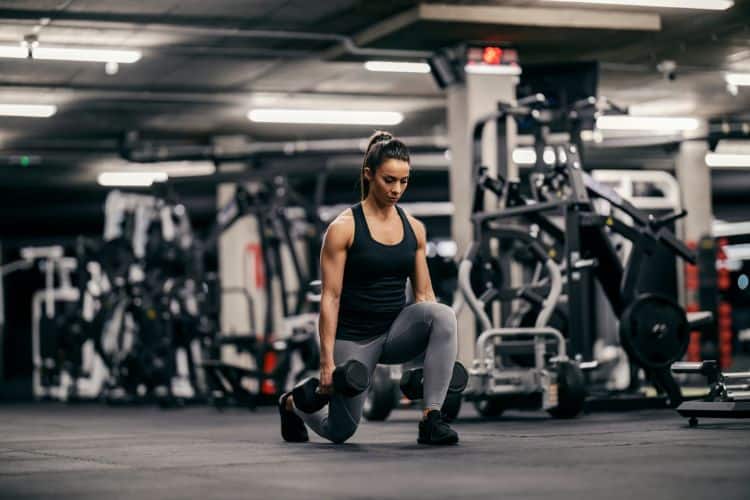
The first block contains a goblet squat, dumbbell Romanian deadlift, and alternating reverse lunge. Perform each exercise for forty seconds, recover for twenty seconds, and repeat the sequence once. These movements train your lower body through both knee-dominant and hip-dominant patterns.
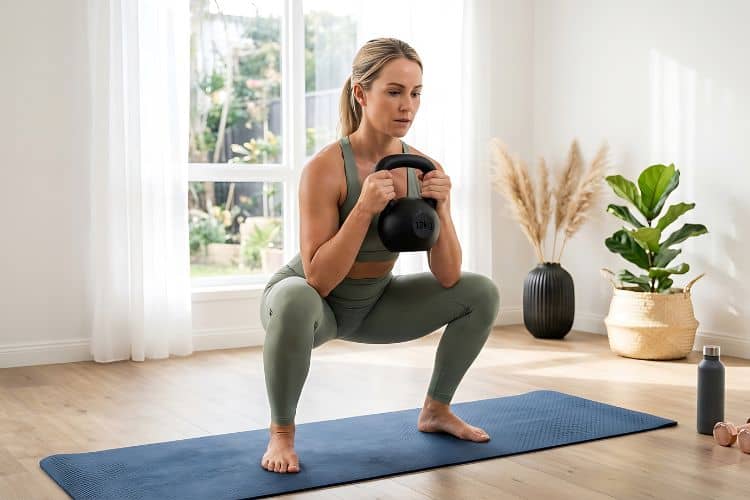
Hold one dumbbell vertically at your chest, supporting it securely with both hands. Stand with your feet around shoulder width apart, adjusting your stance slightly for comfort. Bend your knees and hips to lower yourself, then push through your feet to stand.
Keep your heels grounded and let your knees follow the general direction of your toes. Your torso may lean forward somewhat depending on your proportions. Aim for a steady descent and a smooth return, stopping at a depth you can control without losing balance.
Hold the dumbbells near the front of your thighs with your knees slightly bent. Send your hips backward while keeping the weights close to your legs. Lower until you feel tension through the backs of your thighs, then bring your hips forward to stand.
The dumbbells do not need to reach the floor. Your comfortable hip-hinge range determines the bottom position. Avoid turning the movement into a deep squat or leaning backward at the top. Think about keeping your torso and pelvis moving together.
Hold the dumbbells by your sides or begin with bodyweight. Step one foot backward and bend both knees, lowering only as far as you can remain stable. Press through the front foot to return, then change sides.
Keep your feet separated enough for balance instead of stepping onto a narrow line. If alternating lunges feel unstable, use a stationary split squat. Work one side during the first round and the other side during the second round to keep the total training time balanced.
The second block uses a dumbbell floor press, bent-over row, and standing overhead press. Repeat the same forty-seconds-on, twenty-seconds-off format for two rounds. This section combines pushing and pulling while giving your legs a break from direct lower body work.
Set up your mat before the workout so the floor transition stays simple. Use the recovery after the floor press to sit up and stand carefully. Choose lighter dumbbells for the overhead press whenever your lower back or shoulders begin compensating for the load.
Lie on your back with your knees bent and feet supported on the floor. Hold the dumbbells above your chest, then lower them until your upper arms gently contact the floor. Press upward again while keeping your wrists stacked over your forearms.
Keep your elbows somewhat tucked rather than flared directly sideways. Pause briefly at the bottom instead of bouncing your arms. The floor limits your range of motion, making the exercise practical without a bench, although you should still use a pain-free pressing position.
Stand with softly bent knees and hinge forward at your hips. Hold the dumbbells underneath your shoulders, then draw your elbows back toward your hips. Lower the weights slowly while keeping your torso steady.
Avoid jerking your chest upward to move the dumbbells. If your lower back tires before your upper back, use a supported one-arm row with your free hand on a sturdy surface. Train one side in the first round and the other in the second.
Hold the dumbbells near shoulder height with your palms facing forward or slightly inward. Brace your midsection and press upward through a comfortable range. Lower the weights under control, keeping your knees soft and your rib cage relatively steady.
Use resistance that allows you to press without leaning backward. If overhead movement is uncomfortable, substitute another interval of floor presses. That substitution changes the shoulder emphasis, but it lets you train pressing strength without forcing a position that does not suit you.
The third block includes a dumbbell sumo squat, hammer curl, and dead bug. It combines another lower body movement with arm training and deliberate core work. Continue with two rounds of forty seconds of exercise and twenty seconds of transition.
Stand slightly wider than your usual squat stance, with your toes turned outward comfortably. Hold one dumbbell securely in front of your body. Bend your knees and hips, then stand while keeping your feet firmly grounded.
Choose a stance that lets your knees move comfortably over your toes. Wider is not automatically better. If this variation feels awkward, repeat the goblet squat from the first block. The purpose is another controlled squat exposure, not achieving an unusually deep or wide position.
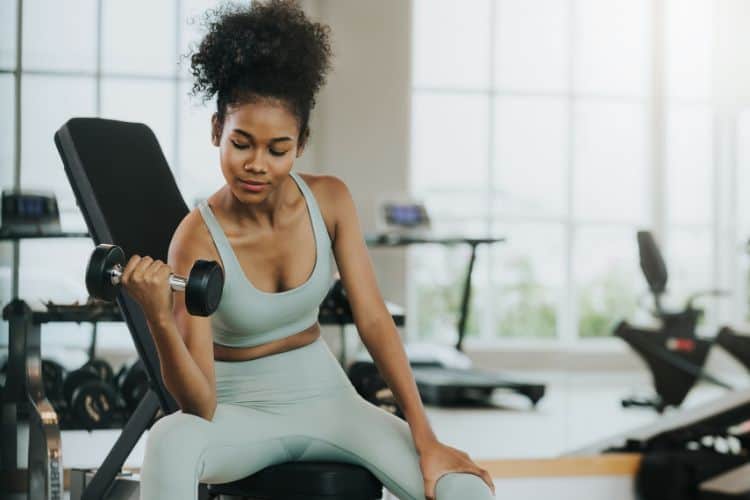
Stand tall with the dumbbells at your sides and your palms facing inward. Bend your elbows to bring the weights upward, then lower them slowly. Keep your upper arms close to your body and your shoulders relaxed.
Avoid swinging your torso or driving your hips forward to complete the repetition. If you need momentum, reduce the weight or stop the set. Hammer curls add direct arm work while allowing you to practice maintaining a steady posture after the larger movements.
Lie on your back with your arms reaching upward and your hips and knees bent. Gently brace your abdomen. Extend one arm and the opposite leg through a range you can control, return to the starting position, and alternate sides.
Keep the movement small enough that your lower back does not noticeably arch away from the floor. A heel tap with your arms stationary is an easier option. This exercise intentionally uses bodyweight; adding a dumbbell is unnecessary for the core-control goal of this block.
The finisher consists of four one-minute intervals. During each minute, carry or hold dumbbells for twenty seconds, place them down carefully, march without weights for twenty seconds, then recover for twenty seconds. Repeat that sequence four times.
Use a farmer carry with one dumbbell in each hand if you have a clear walking route. In a smaller space, hold the dumbbells by your sides and march slowly in place. Keep your steps deliberate and your shoulders comfortable throughout the weighted portion.
Choose a load that allows steady posture and a secure grip. Avoid leaning backward, shrugging continuously, or lifting your knees so high that you lose balance. The unweighted marching segment can be brisk, but it should remain controlled.
If your grip is already tired, shorten the weighted portion or complete the whole finisher without dumbbells. This is an opportunity to add movement and carrying practice, not a requirement to finish exhausted. You should still have enough control to set the weights down safely.
Spend the first cooldown minute walking slowly or marching gently as your breathing settles. During the second minute, use a comfortable standing calf stretch, dividing the time between sides. Use the third minute for a gentle seated hamstring stretch, again changing sides halfway through.
During the fourth minute, sit or stand comfortably and take slow breaths while relaxing your shoulders. A gentle chest-opening movement is optional if it feels good. Avoid forcing any stretch or using the cooldown to push your joints into an unfamiliar range.
If you are new to strength training, begin with thirty seconds of work and thirty seconds of recovery. Use light resistance for the squat and hinge, bodyweight for lunges, and an easier dead bug variation. Practice each movement before trying to coordinate it with the timer.
Use a sturdy support for stationary split squats when needed. If getting down to the floor takes longer, begin that transition during the rest interval and start the next exercise when ready. Do not hurry to match the timer.
For people who need an entirely standing session, replace floor presses with wall push-ups and dead bugs with slow standing knee lifts. These substitutions change the training stimulus, but they offer a more accessible way to practice the session structure.
Start with two sessions per week on nonconsecutive days if that fits your current training level. An established exerciser may use it three times weekly, provided recovery is adequate and other workouts are accounted for. Avoid automatically adding it on top of an already demanding lifting schedule.
During the first week, learn the exercises and record the weights you use. During the second, aim for more consistent technique or a small increase in controlled repetitions. Increase resistance when you can complete both rounds comfortably with the intended effort.
Change one variable at a time. Adding heavier dumbbells, faster repetitions, and shorter rests simultaneously makes it difficult to judge progress. Keep the thirty-minute structure stable so you can compare sessions and identify improvements in strength, control, or recovery.
The most common mistake is treating every forty-second interval as a sprint. Rushing squats, lunges, and presses can turn manageable resistance into poorly controlled movement. Use the timer to organize the workout while allowing your technique to determine the number of repetitions.
Soreness is not a reliable score for workout quality. You can make progress without feeling extremely sore the following day. Likewise, calorie estimates from watches or workout calculators vary and do not tell you whether your strength training was well executed.
Track practical measures instead: weights, controlled repetitions, exercise variations, and how you recovered. Those details give you a clearer picture of progress than a single number on a screen or the intensity of next-day discomfort.
It can contribute to muscle development when the resistance is challenging, training is repeated consistently, and the workload progresses over time. The routine provides two working intervals per exercise. Some experienced lifters may eventually need additional training volume elsewhere in their week.
Yes, with adjustments. Use one dumbbell for squats and two-handed hinges. For unilateral presses, rows, and curls, train one side in the first round and the other in the second. Keep the dead bug unweighted and alternate carrying sides between finisher intervals.
The session uses intervals, but its main purpose is controlled resistance training. Your breathing may increase during the circuits and finisher, yet you do not need maximal cardiovascular effort. Choose weights and pacing that support good lifting technique.
It can be part of a broader weight-management routine by adding physical activity and helping maintain or build muscle. Weight change depends on overall energy balance and consistent habits. No single workout guarantees a particular rate of fat loss or a specific appearance.
This 30 minute full body SplitLean dumbbell workout gives you a practical sequence from the first warm-up step to the final cooldown breath. It covers major movement patterns, includes clear recovery periods, and offers modifications without requiring complicated equipment.
Begin with resistance you can manage, record a few useful training details, and repeat the workout consistently. Over time, better control, stronger lifts, and more comfortable movement can show that your half-hour sessions are doing useful work.
Build on this 30 minute full body SplitLean dumbbell workout with our SplitLean 5-Day Full Body Plan for a structured weekly routine, or explore the SplitLean 4-Day Strength Plan for an upper- and lower-body split. Keep your training challenging with our Progressive Overload Dumbbell Workout Plan, choose the 20 Minute Full Body Dumbbell Workout when time is limited, or try the 35 Minute Full Body Dumbbell Workout when you have a longer training window.
Stay up to date on the latest women’s health, fitness and lifestyle trends and tips.
